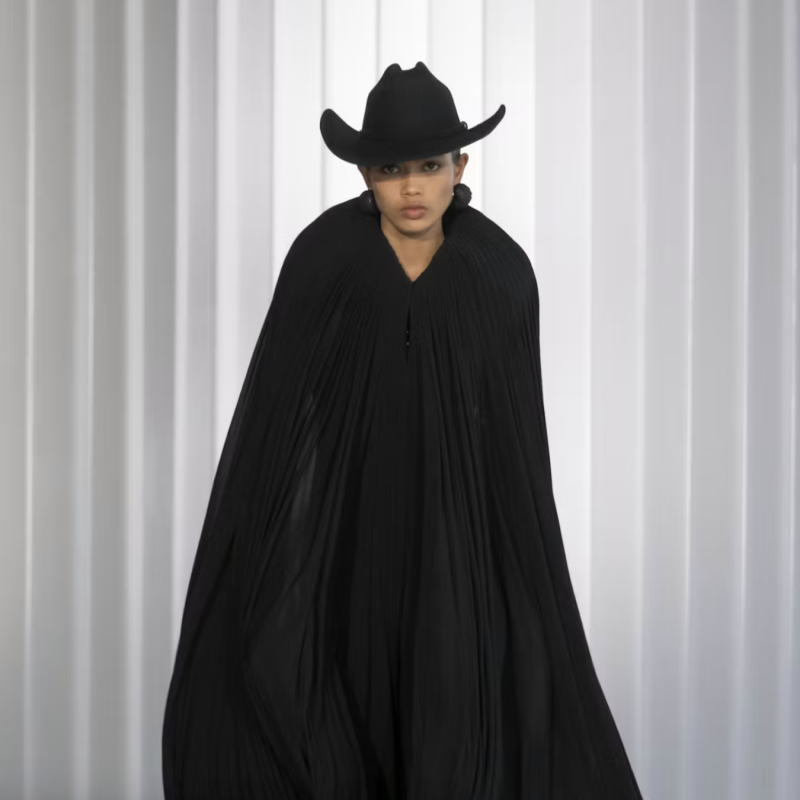
After a debut that split the room last season, expectations for Duran Lantink’s second ready to wear outing at Jean Paul Gaultier were clear. What would the Dutch designer do next now that the shock had landed? If his first collection leaned into provocation, with bulbous silhouettes, uncanny trompe l’oeil bodysuits and internet breaking theatrics, Autumn Winter 2026 revealed a designer far more interested in control, atmosphere and character.
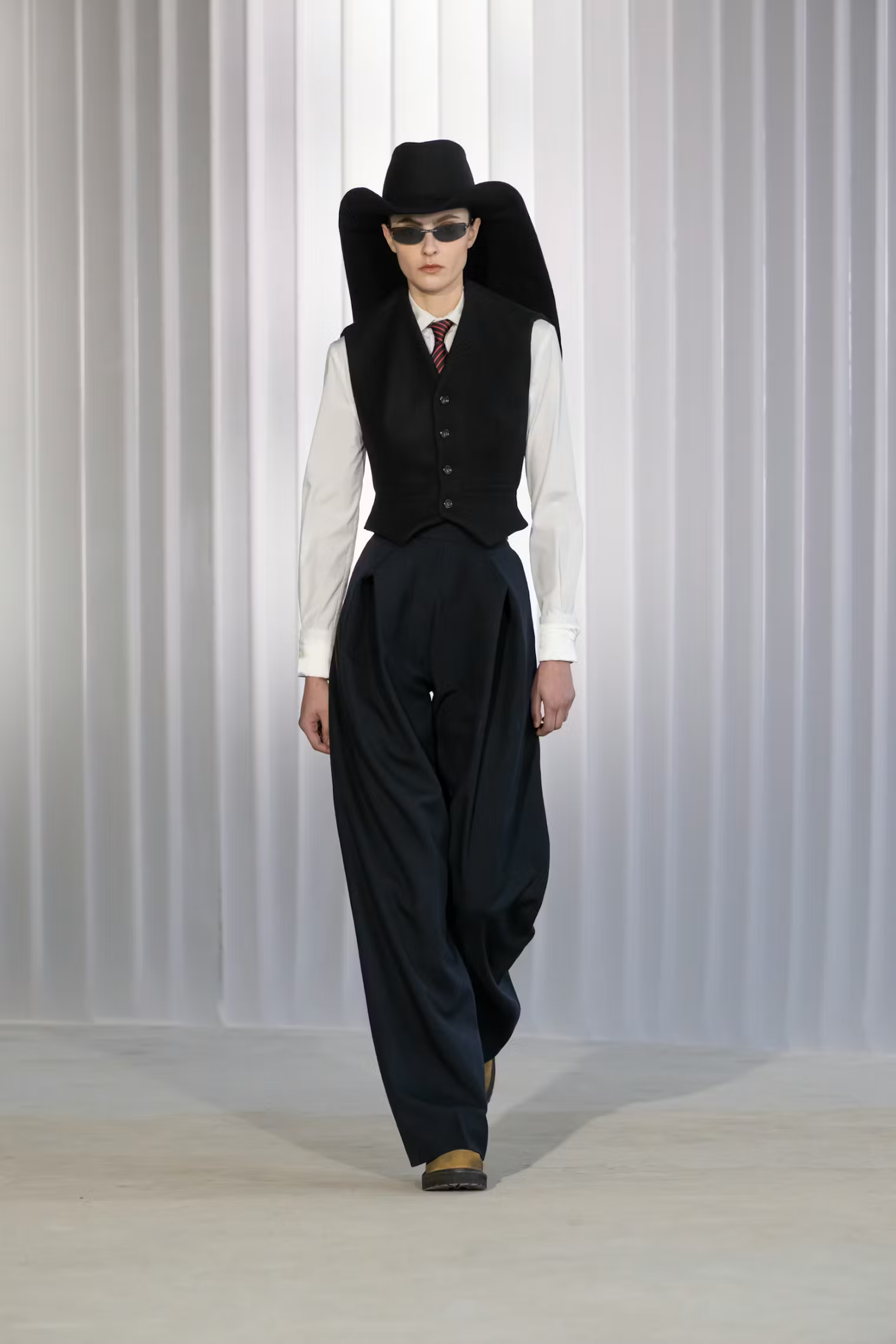
The show unfolded like a cast of cinematic protagonists drifting through a desert-tinged fever dream. Cowboy hats, sharply cut tailoring and elevated eveningwear formed the backbone of the collection, subtly nodding to Gaultier’s historic flirtations with Western iconography without falling into nostalgia. Instead, Lantink filtered the theme through his own warped lens of proportion and body manipulation. The designer described the collection backstage as an exploration of “madame masculinity,” sparked by an image of Marlene Dietrich holding a whip. The reference translated most clearly in the tailoring and resulted into looks that felt somewhere between desert gunslinger and silver-screen dominatrix. A standout look transformed a hood into a gilet, paired with tailored trousers and desert boots; a perfect distillation of Lantink’s ability to fuse humour, fetish and precision tailoring into a single silhouette.
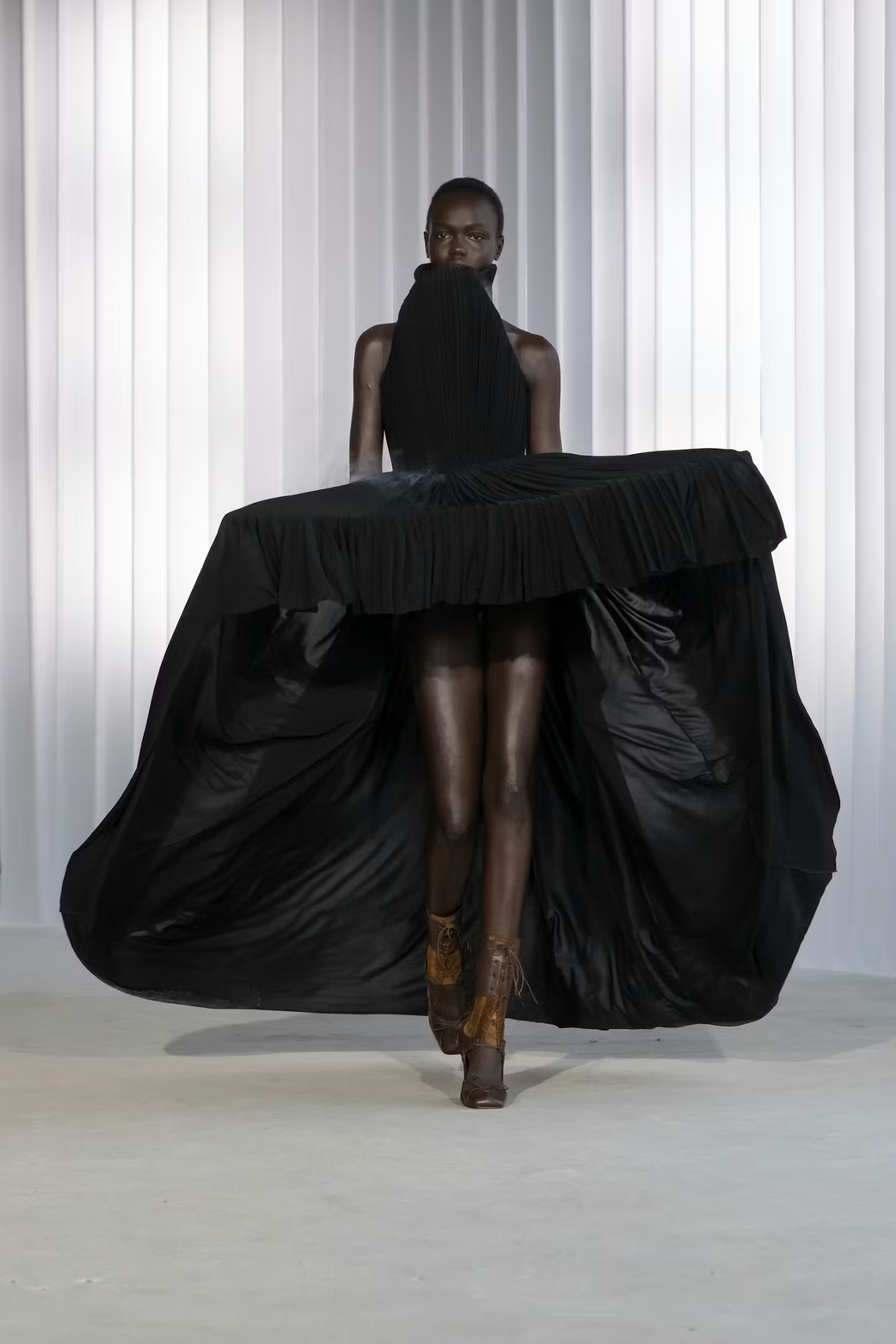
One of the first cues arrived in a sculptural black dress built around a wide circular silhouette that hovered dramatically around the body, almost like a dark halo. From the tightly gathered centre at the waist, thin streams of actual smoke billowed from the folds and drifted upward like a literal smokescreen. The moment felt theatrical yet oddly controlled, the kind of surreal gesture that felt less like a gimmick and more like a cinematic device. Where his debut collection pushed outward with exaggerated hips and bodily distortion, here the experimentation moved upward. Necklines rose dramatically, hovering around the chin like protective shields. Lantink’s signature bubble hips still appeared, but this time they were woven into gowns with far greater restraint. The result felt deliberate and composed, allowing the silhouette to remain sculptural without tipping into caricature. The provocation has however not disappeared entirely. It simply arrives in a more measured register. Wooden doll printed bodysuits appeared midway through the show, some styled with jockstrap like crotch details and stark white balaclavas. Yet even these moments felt like a significant step down from the rather grotesque hairy bodysuits that dominated his debut “Junior” collection. What once felt aggressively confrontational now reads as controlled absurdity.
If the debut relied heavily on spectacle to announce itself, this collection suggested a designer far more comfortable inside the house. This time Lantink impressed with silhouette, drama and tailoring rather than the bag of tricks that occasionally masked the uncertainty of his debut. The clothes carried confidence. The closing look summed it up best. A black jersey cape bounced and sprang with every step, its rounded shoulder line hovering dramatically above the body, topped with a cowboy hat. It was theatrical, slightly surreal and unexpectedly elegant.