Lichting 20 Years
20 Years of Lichting: The designers it launched
For two decades, Lichting has marked the point where a fashion education meets the professional world. Since its first edition in 2007, the platform has brought graduating designers together on one runway, giving a new generation an opportunity to put their work in front of the Dutch and international fashion industry.
For those standing on that runway, however, Lichting is only a few minutes. What follows can be a career of decades, with some designers entering major international fashion houses, others building independent labels or multidisciplinary practices, and many moving between fashion, art, craft, education and entrepreneurship.
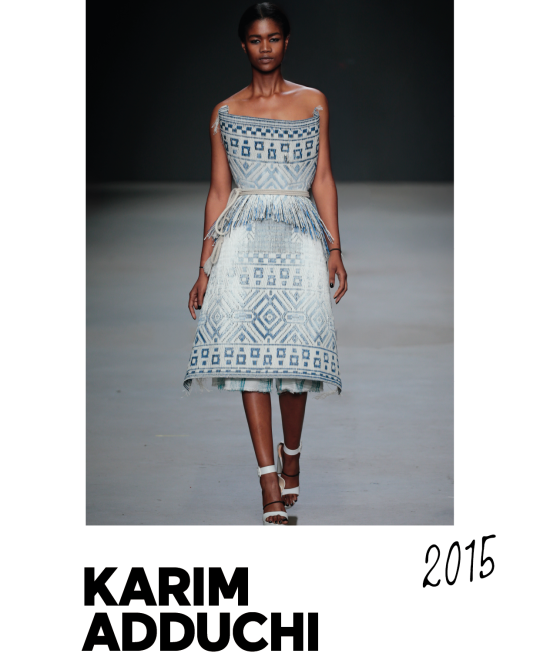
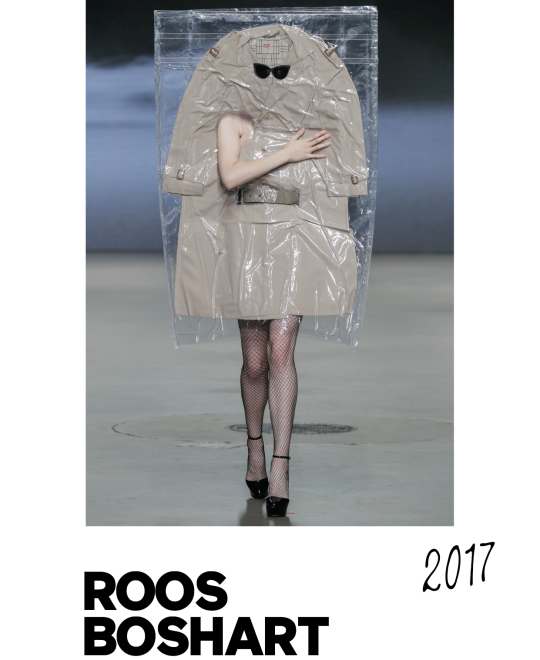
For its 20th anniversary, Lichting looks back at the designers who have taken those different paths. Presented as part of The HUB26 during Amsterdam Fashion Week, the exhibition brings together designers from across two decades, from the first generations of Lichting participants to the newest names in the platform’s history. Seen together, their work offers a snapshot not only of where Dutch fashion has come from, but of the very different paths a career can take once the runway is over.
Opening doors to the industry
For many of the designers who participated in Lichting, the significance of the platform was immediate. It was a chance to move from the relatively contained world of fashion education into an industry that could otherwise feel difficult to access.
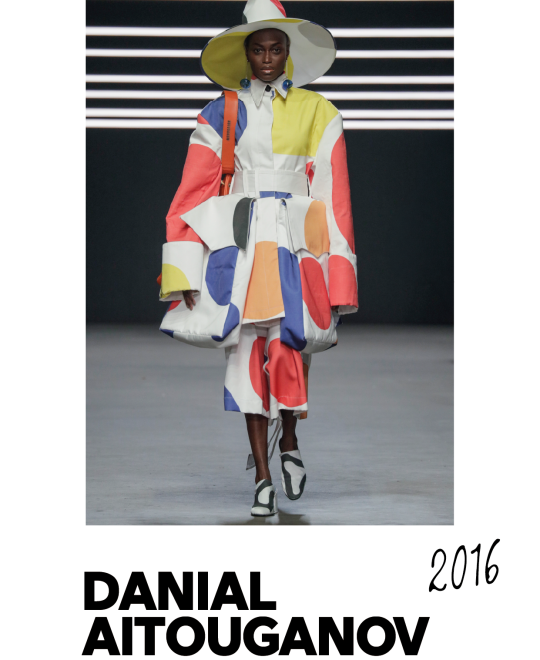
For Danial Aitouganov, the connection was direct. After presenting at Lichting, jury member Ferry Schoew saw potential in his work and connected him with Chloé.
“It opened a door for me. From there, it was up to me to find my way into the house. It took some time, but eventually I secured a position as a junior designer.”
Aitouganov subsequently worked at Chloé, Burberry and Louis Vuitton and is now working at Kenzo, while also developing his own brand, zomer, which he launched three years ago. Based in Paris, the label is continuing to grow while maintaining a connection to the Netherlands.
Asked whether Lichting played a role in where he is today, his answer is unequivocal:
“Absolutely. I would not be where I am today without Lichting, the people I met through it and, of course, a certain amount of luck.”
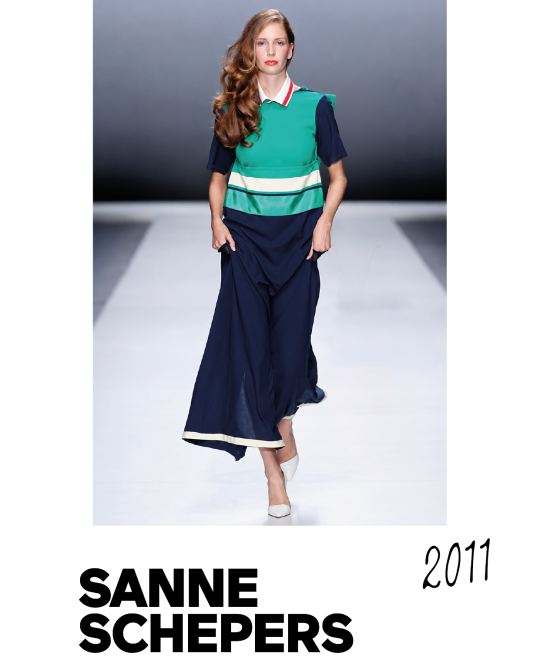
For Sanne Schepers, the platform’s impact was more tangible still. The prize money enabled her to continue her studies at the Institut Français de la Mode in Paris, something she could not otherwise have afforded.
“The biggest advantage Lichting has given me at the start of my career, maybe not the most sexy answer, but surely very real, is the amount of prize money. At the time of Lichting, I had already been accepted at the Post Graduate Program Fashion Design at Institut Français de la Mode in Paris, yet I did not have the financial resources to afford the tuition fee. Lichting made it possible for me to continue my studies in the international industry and enabled me to take these first, very important, steps abroad.”
Schepers’ career has since expanded well beyond the boundaries of a traditional fashion-design practice. Working across fashion and craft, she is now part of Schepers Bosman while also combining her practice with research and education as Head of Fashion at ArtEZ.
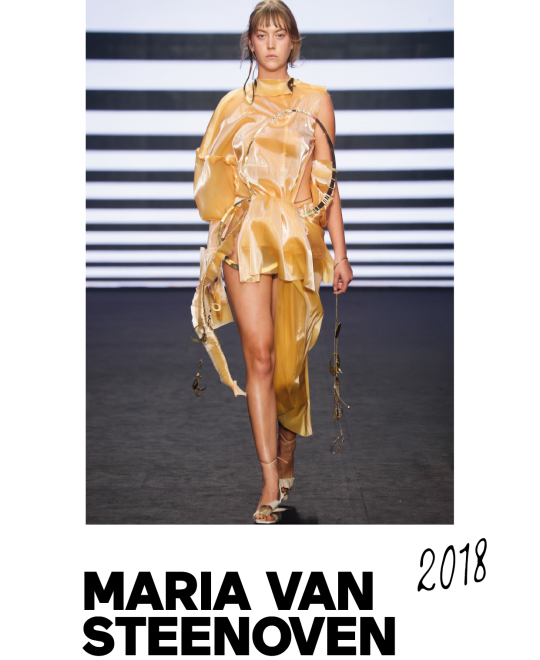
For Maria van Steenoven, the opportunity came through a connection made around the competition. Another ArtEZ graduate working at Chloé saw her work and approached her about an internship.
“You’re suddenly one of the people who has been selected, rather than just one of seventeen graduates,” she says. “So it definitely helped.”
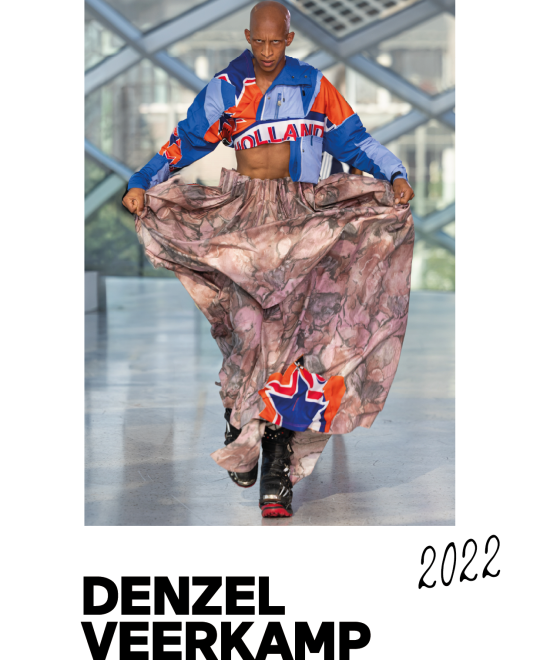
For Denzel Veerkamp, the opportunities began almost immediately after the show, although his strongest memory of the night starts with a minor production crisis.
One of Veerkamp’s looks was finished with studded football boots, until the venue’s floor forced a last-minute rethink. With the studs removed, the shoes became dangerously slippery — not exactly ideal for a model instructed to walk with an aggressive, performative presence. What followed was a small lesson in the unpredictability of staging a fashion show.
“Afterwards, you basically have a shoe sole without the studs, but it’s just this really hard, smooth plastic. We then had to try to sand it down because my model was flying in all directions. It was immediately a very valuable experience of, ‘Wow, this is everything that comes with putting on a show.’ You immediately make some kind of statement. Of course, you already do that yourself through the way you shape and present your work, and by simply being there. But it also means that you’re immediately seen by the right people.”
Two contacts made around his Lichting presentation — Amsterdam Museum curator Roberto Luis Martins and Mariette Hoitink — would later lead to collaborations with the museum and WE Fashion. The latter eventually became a major sponsor of his 2024 collection Abrasei.
“Those are two instances that were directly linked to my participation in Lichting and that went on to mean a lot to me afterwards.”
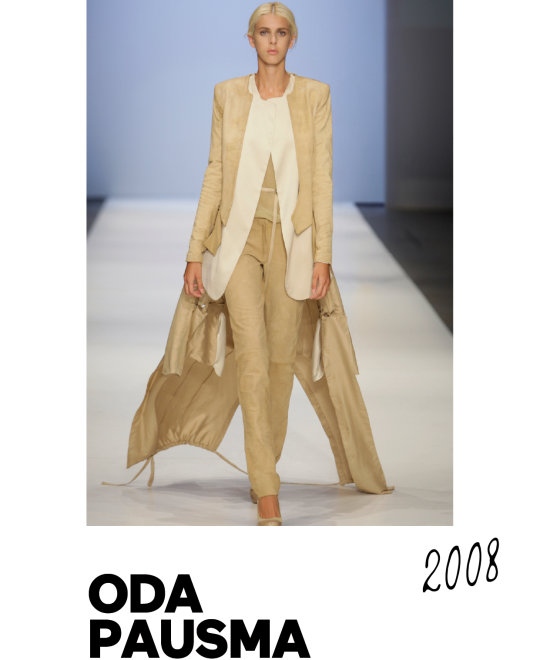
For Oda Pausma, the platform gave her something more internal: confidence at a particularly vulnerable point in a designer’s life.
“I think the most important thing, ultimately, is that you get a platform through which you develop a certain level of confidence. You think: Apparently, the language I speak is a language that people want to hear, see or feel.
That’s quite special and very personal when you’re presenting to such a large audience. It’s more about developing a kind of confidence as a designer, and confidence in what you make. That it is apparently good enough to show to an audience like that. I think that’s really what it gives you.
Presenting a collection is such a vulnerable thing, and I think confidence is really difficult in that context. You’re so vulnerable with your story and your work, and then you put it all out in the open. But if the response is enthusiastic, I think it really makes you grow.”
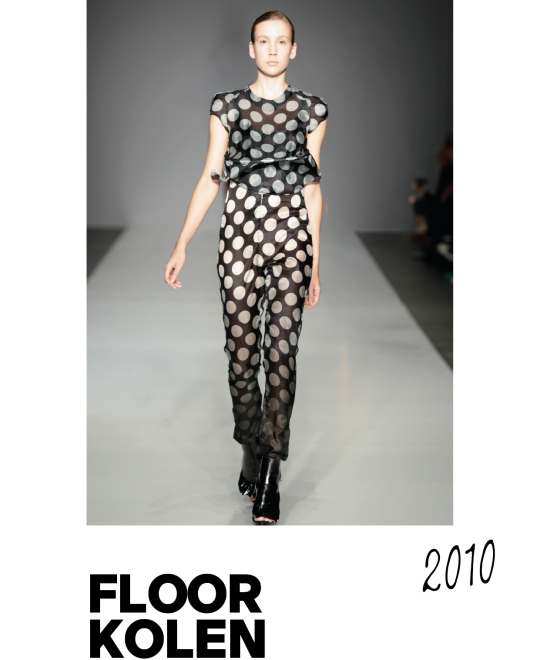
For Floor Kolen, that same confidence came from being selected, regardless of whether she won.
“I think being allowed to be part of Lichting, winning or not, the ten that get selected, getting that confidence that you did something right, and you set something up that interests a larger audience than just what resonates within yourself — I think that gives a huge amount of confidence to pick up all that energy, that little bit of energy you have left, and get out in the world.
I think that’s really something that’s not tangible, but it’s something that’s so important. And I think for me, that was the most confident period in my career.”
That confidence can be easy to overlook when discussing a platform such as Lichting. Yet for designers leaving education, the ability to see their work as something that can exist independently of an academic context may be one of the first steps towards building a career.
Where they went from there
Looking across the careers that emerged from Lichting, there is little evidence of a single model for what comes next. Some participants went directly into international fashion houses. Others developed independent labels, moved between disciplines or built businesses around their creative practices. Several have returned to Amsterdam Fashion Week with their own work.
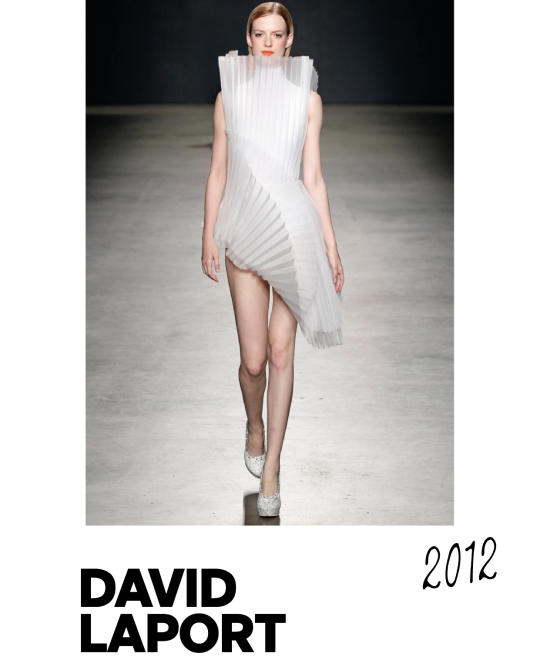
David Laport‘s career is a good example of how far that trajectory can move from the conventional idea of a fashion label.
He graduated in 2012 and has worked independently ever since, producing collections while collaborating with clients, celebrities and national and international companies. Today, Studio-DLP works between Amsterdam and New York, and his practice spans fashion, film, product design and theatre.
“Lichting has brought me so much. I graduated in 2012 and have worked independently ever since. Over the years, I have created many collections, worked with a wide range of clients and celebrities, and had the opportunity to collaborate with both national and international companies.
Today I work with Studio-DLP between Amsterdam and New York. My work has become much more multidisciplinary, moving between fashion, film, product design, and theatre projects. I have moved away from focusing solely on collections and I truly enjoy the combination of these different disciplines.”
For Floor Kolen, the route has involved moving through some of the industry’s largest fashion houses before reconsidering what she wanted from her own career. After years of working within an increasingly commercial fashion system, she chose to work freelance. Her perspective is shaped by the difference between the fashion industry she entered as a graduate and the one she works in today.
“When we started studying fashion, it was about creativity. It was a little bit a different era. Now it’s capitalist era times thousand.”
Her freelance career has subsequently allowed her to move between projects and clients, including an especially productive collaboration with Ecco.Kollektive in the Netherlands. Through that project she worked with designers including Peter Do, Ottolinger and Kiko Kostadinov, later developing individual projects with them.
A project for Helmut Lang brought her into the brand’s archive, where she spent weeks researching its history, original army bags and functional objects.
“We were quite conceptual, so writing actual manifestos about the collection setups that we were doing at Helmut Lang, which clearly nobody writes a manifesto anymore. But it was amazing to be able to work in that way and also taking the time, two or three weeks, to really dive in, writing what bags should mean to the brand and why they should exist.
It made the design process after so easy. Everything just comes naturally when you have really taken the time to set out what it should mean, you know? Not just taking a few nice inspirations and making a few cool things from there.”
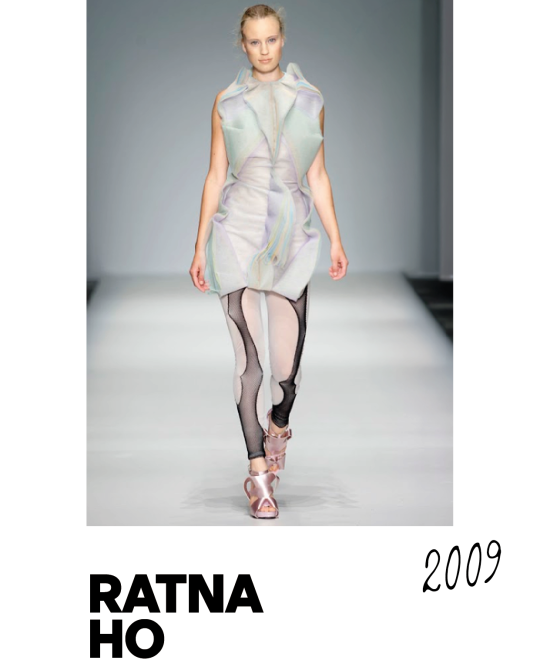
Ratna Ho made a different kind of decision after graduation. Her initial collection emerged from her own creative instincts, but she soon identified bags as a more commercially viable direction in which to develop her practice. That decision eventually became Fraenck, a business built around design, social impact and sustainability.
Her trajectory points to another reality of a contemporary fashion career: being a designer can also mean becoming a business owner, employer and entrepreneur.
“I also want to prove that creativity and commercial success can go hand in hand.”
For Oda Pausma, the path has been within Viktor & Rolf, where she works at couture level in Paris. While her own aesthetic language is distinctly different from that of Viktor & Rolf, she has become highly skilled at understanding and translating their creative vision into construction, engineering and detail. That contrast is precisely what she finds valuable.
“What’s interesting is that my own aesthetic language is quite different from Viktor & Rolf’s. Working there requires me to really understand their world and translate their ideas into something physical.
“I’ve always been a maker, very focused on construction, engineering and detail, and that is something I have been able to develop enormously there. They also work beyond the body and against gravity. For them, it really doesn’t matter how a dress is going to hold itself up. They simply draw it and then make it happen.
That challenge of actually building something is what makes it incredibly exciting. Every season they create a completely different world, so time goes incredibly quickly.”
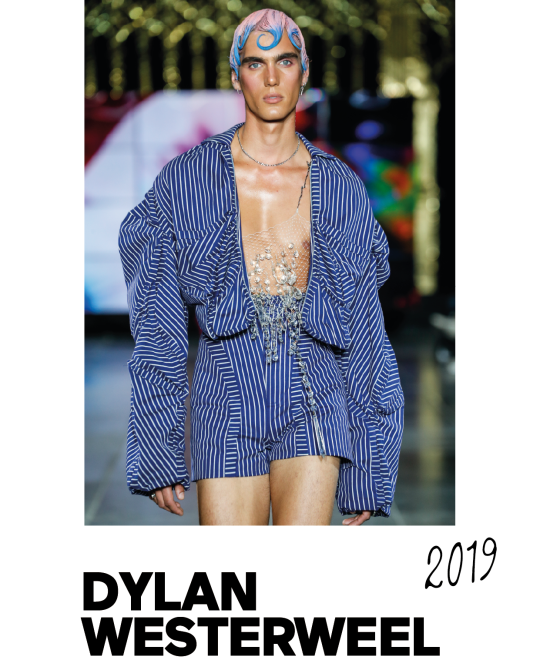
For Dylan Westerweel, the career that followed Lichting has remained closely connected to the ideas he was exploring at the time: masculinity, queerness, technique and the tension between softness and strength. His own Lichting presentation was also unusually personal. Held at Amsterdam’s Nieuwe Kerk, it gave him the opportunity to present a collection celebrating his queerness in a space he felt had not historically been made for that kind of expression.
“Having my Lichting show in the Nieuwe Kerk and then winning just made it that much more special because it’s me as an Amsterdam kid celebrating my queerness in a space that’s not made for queerness in my hometown.
I think that was such a, like, a level on level on level of celebration and of ownership and of being valued for who I am and what I do in the space that I feel it should be valued. It’s something that’s never going to be taken away from me. It’s really special.”
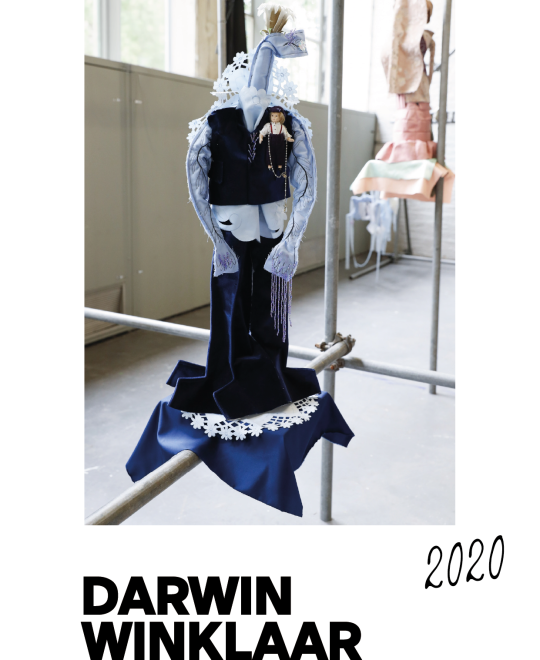
For Darwin Winklaar, representation was similarly inseparable from the significance of the Lichting moment. As the first designer from the Gerrit Rietveld Academy from Aruba to win the title, his presentation centred Caribbean storytelling through an installation of saint dolls dressed in his collection.
“The moment history was rewritten: becoming the first designer from the Gerrit Rietveld Academy from Aruba to claim the Lichting title. Transforming the stage with an installation of saint dolls adorned in my collection, an uncompromising celebration anchored entirely in Caribbean storytelling, was more than just a victory. Rewriting the academy’s legacy while centring a Caribbean perspective in a space where it had never been seen before felt truly paradigm shifting. It was a watershed moment for fashion, art, and representation.”
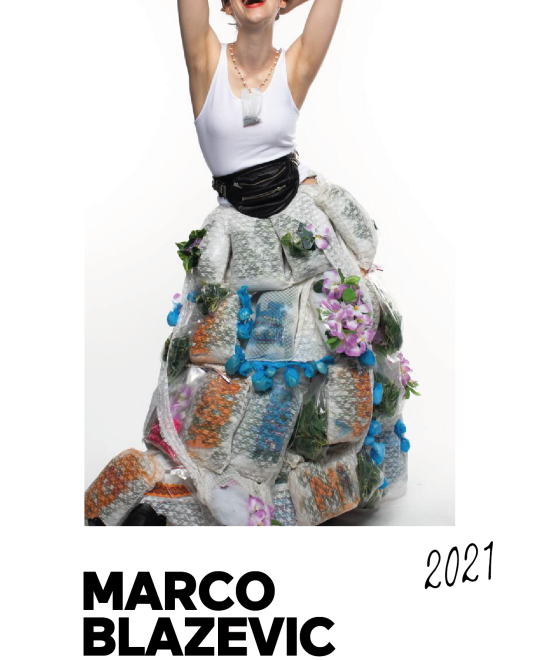
Marco Blazevic describes Lichting as the point at which they were introduced to Amsterdam’s creative industry almost all at once. The relationships they made through Lichting Founder Mariette Hoitink subsequently became important not only to their own practice, but to The Patchwork Family, the collective they built with Meike van Lelyveld. Blazevic deliberately kept Patchwork rooted in Amsterdam, seeing collaboration rather than competition as one of the city’s strengths.
“I feel Amsterdam is just a very supportive place. I think everyone in Amsterdam knows they can’t get anywhere alone. It’s not that much of a competition, and people know they need to work together and help each other to put Amsterdam and its creative sector on the international map. So we’re all very happy when other Dutch designers do great — not even just designers, but everyone in the creative sector, because I think it really stimulates each other.”
Together, these trajectories complicate the conventional image of the fashion graduate: designer launches label, label grows, designer becomes established. The Lichting alumni have instead built careers across fashion houses, independent labels, education, museums, craft, film, theatre and entrepreneurship.
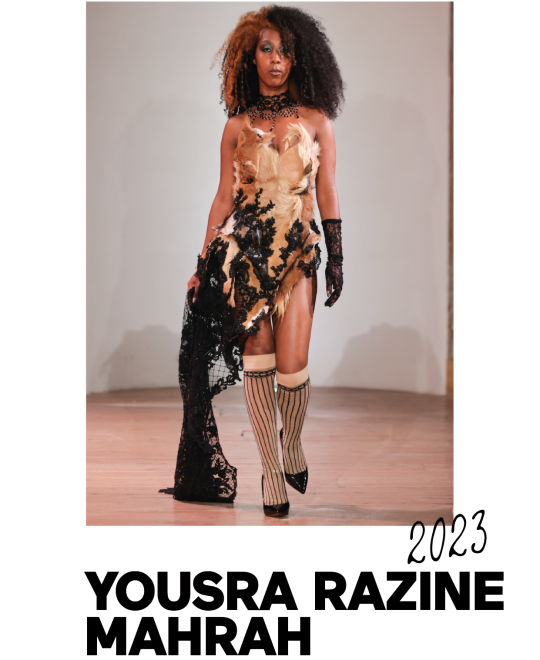
For Yousra Razine Mahrah, that evolution is also a reminder that the initial moment of recognition is only the beginning.
“For me, Lichting was also a way of being introduced to a professional network at a very early stage. Which has helped tremendously. After graduating, I was still learning how everything worked, so having people who already knew my work made it easier to have conversations and find new opportunities.”
Her own career reflects a process of continued development. She sees Lichting as an early introduction to a professional network, but argues that the industry needs to think beyond the moment of discovery.
“There is a lot of attention for discovering young talent, but winning an award or graduating does not automatically mean that you have a sustainable career.”
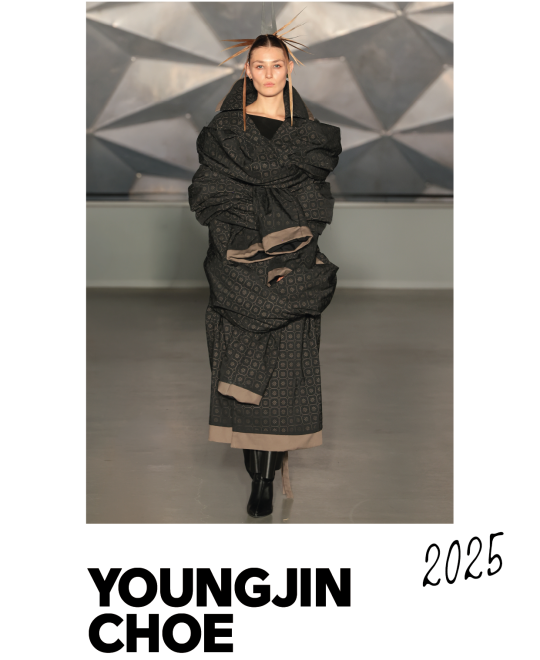
Youngjin Choe, who won Lichting in 2025, represents the most recent generation to make that transition. For him, the significance of the platform is still unfolding. As he builds his own brand in the Netherlands, the opportunity to present his work remains closely tied to the larger challenge of establishing a position within the industry.
“The upcoming fashion show during AFW26 is more than just a presentation of a new collection. For me, it is an opportunity to communicate my vision, to prove the value of my work, and to earn the trust of the audience. As a designer building a brand based in the Netherlands, I see it as an important step in establishing my place within the industry. That is why I’m fully committed to this process, and I hope people will continue to follow and support my journey.”
For 20 years, Lichting has demonstrated its ability to identify designers and give them an initial stage. The careers of its alumni show what can happen when that stage leads to further opportunities, and how varied those opportunities can be.
Looking back at the beginning
The anniversary exhibition offers a different way of considering that trajectory: rather than only looking at where these designers are now, it returns to the work they made when their careers were just beginning.
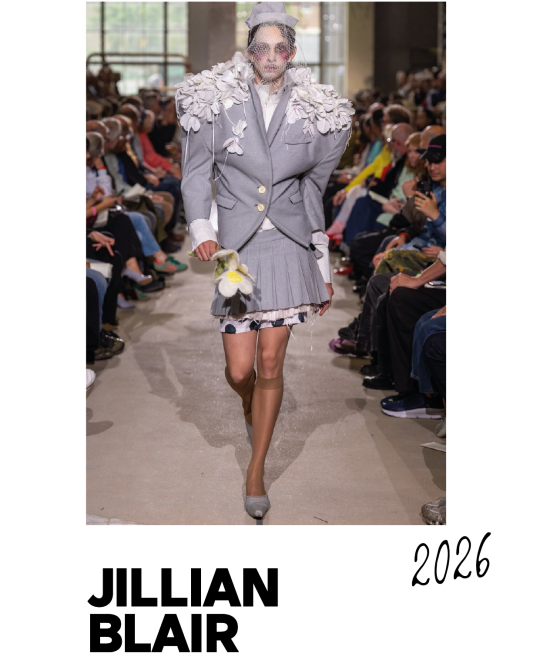
The designers have been asked to select a look from their Lichting collection and consider it from the perspective of where they are today. In some cases, the connection between the early work and the present practice is obvious. In others, the distance is just as revealing.
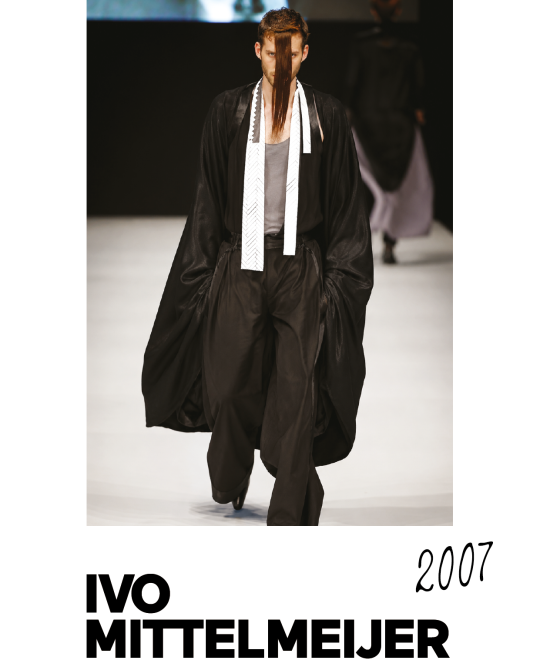
For Ivo Mittelmeijer, looking at his work again is an uncomfortable but productive experience.
“Looking at the work is confronting because I can see both how much has changed and how much has remained the same. Even then, I was interested in the body, structure, masculinity, transformation and the way clothing can create a certain presence. I did not yet have the language or experience I have now, but the foundations were already there.
For a long time, I thought that moving forward meant leaving earlier work behind. Now I understand that much of my career has been about returning to the same questions with more honesty and experience.”
For him, the exhibition piece also becomes a bridge between his education and his current practice. His latest work, UNTITLEDrubber, connects his education, personal life, community and continuing interest in clothing as a way of changing how someone inhabits their body. The challenge now is how to develop that practice internationally without losing the intimacy and craftsmanship that made it meaningful in the first place.
David Laport sees a more literal continuation. The techniques he developed for his Lichting collection eventually became part of the signature of his practice and contributed to work that reached the MET Gala.
“I love that the first work I presented during Lichting has played such an important role in my career. The techniques I developed at the time eventually became an important part of our signature, and they remain so to this day.”
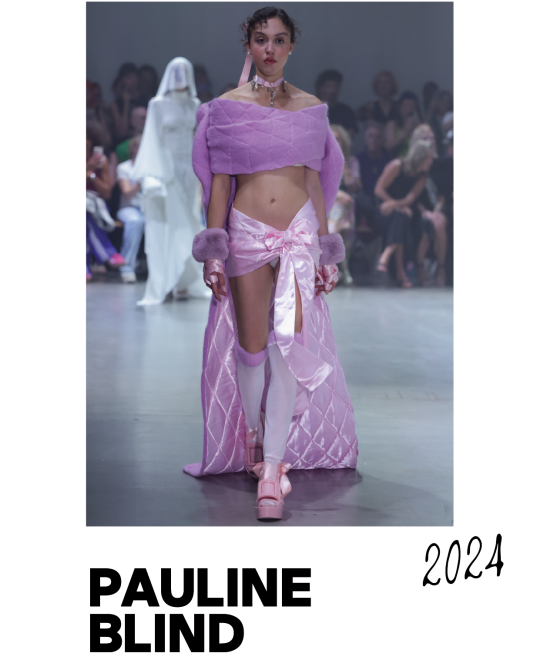
Pauline Blind‘s chosen look, The Bow, offers perhaps the clearest example of a graduation idea becoming a recurring part of a designer’s identity.
“I am presenting what I think is my most known look from my graduation collection ‘The Bow’. It’s the look that has received the most recognition and awe, strengthening my belief that beauty has so much purpose in our world.
Bows have since become a signature piece of my brand, huge bows, many bows, deconstructed bows, metal bows… you name it. I love thinking of them as both an anchor and a starting point for endless reinvention, always carrying the same identity while continuing to evolve.”
For Dylan Westerweel, the selected look is deliberately not the most spectacular piece from his collection. Instead, he has chosen a muscle 3D patchwork jacket with an embroidered heart.
“There are a couple of pieces in my collection that have already been in exhibitions and in shows, but I chose this outfit because of the simplicity of it, and how hard it was to make. It really shows what I was trying to say. The softness of the fabric, but then also using this literal anatomical body to shape it. It’s just, it’s a bit mad.
I think everyone’s going to come with their showpieces. But I don’t want to come with a showpiece. I want to come with a piece that tells my story. And I think it’s really telling the story of my view on masculinity, my view on how soft and also how hard masculine beauty can be.”
Yousra sees her own selected piece as an early version of questions she is still working through.
“When I look at K*tMarokkaan now, I can see that a lot of the questions I am interested in today were already there. I was already questioning identity, expectations and the different worlds I was moving between.
The difference is that I have changed quite a lot since then. At the time, my work was much more direct and confrontational. I think I needed that. Now I am less interested in choosing one side of an argument and more interested in the grey areas in between. That is also where my current research is taking me.
So when I look at the work in this exhibition, I see the beginning of something that I am still developing today. It reminds me where I started, but also how much my perspective has changed since then.”
Marco Blazevic’s chosen garment has a different kind of longevity. It remains one of their most requested pieces by stylists, despite having been made years ago.
“It’s the best thing I’ve ever made, I think. It’s really also the only thing that never started boring me, and also never seemed to start boring the public. It took me three weeks to make that thing, and I think that after graduation you don’t have that much time ever again to work on your stuff in such detail. Maybe with the help of my amazing interns these days, I could make something similar. In general, however, it’s very hard to find the time and focus to make something so intricate again.”
That may be the most literal illustration of what the exhibition allows us to see. The work exists outside the circumstances in which it was originally made, but the conditions of its making, the time, experimentation, ambition and ideas contained within it, remain visible.
Twenty years of Lichting is ultimately a record of beginnings. But the value of looking back is not simply nostalgia. It is the opportunity to see what those beginnings became: a position at a Paris fashion house, an independent studio between Amsterdam and New York, a business built around social impact, a career in couture, a creative collective, an international label, or a practice that has expanded into education, research and other disciplines.
The designers are no longer standing on the runway waiting to find out what happens next. Twenty years of Lichting is therefore less a record of where these designers started than a chance to trace the distance they have travelled since.
Author: AFW