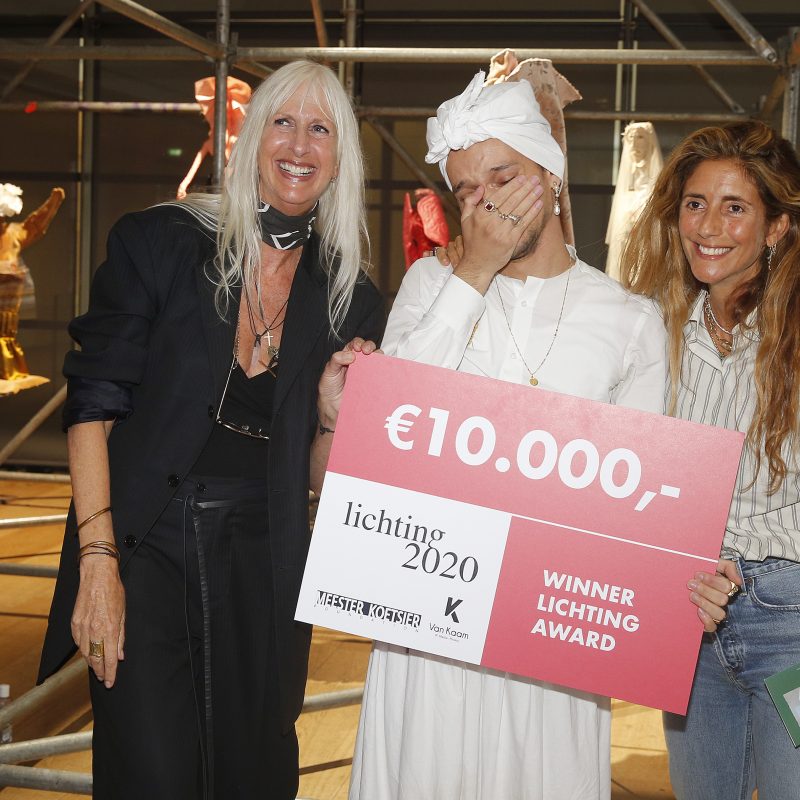
For twenty years, Lichting has served as the launchpad for the next generation of Dutch fashion talent. What began in 2007 as a platform connecting the country’s most promising fashion graduates with the industry has since grown into one of Amsterdam Fashion Week’s defining moments, introducing designers who have gone on to shape the international fashion landscape. As Lichting celebrates its twentieth edition during AFW26, the programme looks both backwards and forwards: ten outstanding graduates will present their collections to an international jury and audience of industry professionals, while a special anniversary exhibition honours two decades of emerging talent through the work of selected Lichting alumni. Beyond the competition itself, the platform’s influence can be felt across this season’s programme, with many of the designers presenting during AFW26 having first been introduced to the industry through Lichting. Ahead of this milestone edition, we spoke with Lichting founder Mariette Hoitink and Amsterdam Fashion Week director Danie Bles about the platform’s origins, legacy and vision for the future.
Mariette, When you look back at the very first edition of Lichting, what was your original ambition for the platform, and in what ways has it evolved beyond what you imagined twenty years ago?
Mariette Hoitink: “When we launched the very first edition in 2007, our ambition was clear: to bridge the gap between fashion graduates and the industry. At the time, James Veenhoff had just started Amsterdam International Fashion Week with his friends. I was already running HTNK, my recruitment and talent agency, for 10 years with a growing network of brands, designers, and talents, and we decided to put our forces together. At the time, every academy held its own graduation show, making it almost impossible for press, buyers and industry professionals to attend them all. We wanted to create one central platform where the very best graduates from across the Netherlands could present their work together. Lichting was born right there: a collaborative concept between Fashionweek and HTNK.
There was so much talent coming out of the academies, but very little visibility. Students would graduate, pack away their collections into boxes and often disappear from view, while the industry was actively looking for new designers. I graduated myself from ArtEZ fashion design. With HTNK, we helped them with their CV, portfolio, and finding their first junior job, but we couldn’t offer them a show with press and industry together. Lichting became that bridge. We created a true ‘debutante ball’, where the finest talent from every academy shared a single runway, inviting the industry to come together and discover them.
Twenty years later, that mission hasn’t changed, but evolved from an event to spot talent into a cultural forecast . It’s a reflection of where fashion—and society—is heading. Every year, the collections engage with themes such as identity, sustainability, inclusion and innovation, offering a glimpse into the future of Dutch fashion.
We’ve also evolved by introducing an open call, making the platform more inclusive and ensuring we represent a broader spectrum of talent. At the same time, we’ve remained true to the creative foundation that has shaped Lichting from the very beginning. Thanks to our long-standing collaborators and the continued support of Amsterdam Fashion Week and Meester Koetsier Foundation, we helped build one of the cornerstones of Dutch fashion talent development.”
Danie, what do you think makes Lichting stand out within the wider Amsterdam Fashion Week programme from your perspective? What does it contribute to the identity of AFW?
Danie Bles: “I honestly think Lichting is the heartbeat of Amsterdam Fashion Week. Without new talent, there is no future for fashion. It has always been the foundation of AFW, and I believe it always will be. What makes Lichting so special is that it connects the past, the present and the future. Established names support and mentor the next generation, while every year a new graduate is given the opportunity to take the next step in their career. The winner receives their own solo show at Amsterdam Fashion Week the following season, so Lichting isn’t just about recognising talent, it’s about actively investing in the future of Dutch fashion.”
What do you think the Lichting show communicates about Dutch fashion today?
Danie Bles: “I think Dutch fashion has a very distinctive identity. Whether we’re talking about sustainability, upcycling, streetwear or denim, we have an incredibly strong reputation internationally. For international buyers and press, Lichting offers a unique snapshot of what the Netherlands has to offer creatively. If you look at the number of designers who have gone on to build international careers, it shows the strength of Dutch fashion education. What’s also interesting is that many of those success stories weren’t actually Lichting winners. That’s an important lesson in itself. You don’t have to win to build an incredible career. Lichting is about opening doors, creating visibility and helping talented designers find their own path.”
Looking back at twenty years of Lichting, are there any alumni who stand out to you in particular?
Mariette Hoitink: “Asking me to choose is nearly impossible because I see our alumni like a proud mother. What makes me happiest is that success takes so many different forms. Some graduates go on to shape the world’s leading fashion houses. Take Jiska van Rossum, for example, who is now Head of Menswear Ready-to-Wear at Louis Vuitton. Then we have the visionaries who use the Lichting momentum to shake up the system on their own terms. Look at Lisi Herrebrugh, who co-directed Nina Ricci, G-Star RAW, and Botter. They proved that Dutch conceptual thinking has massive international power. What moves me just as much is seeing alumni return to Amsterdam Fashion Week with their own standalone shows. Designers like Tess van Zalinge or Marco Blazevic with The Patchwork Family prove that Lichting isn’t just a launchpad but the beginning of a long relationship with the Dutch fashion community.”
Danie Bles: “For me, Duran Lantink immediately comes to mind. I wasn’t yet the owner of Amsterdam Fashion Week when he participated in Lichting, but from the moment I took over AFW he has been incredibly supportive. I’m immensely proud of everything he has achieved. He’s the perfect example of someone who didn’t win Lichting but went on to become Creative Director at Jean Paul Gaultier. It proves that success isn’t defined by winning a competition. Seeing designers develop their own voice and build sustainable careers after Lichting is incredibly rewarding.”
Do you ever see a graduate and immediately think: “This person is going to make it”? Or are the biggest successes often surprises?
Danie Bles: “Sometimes you see a collection and immediately think, this is extraordinary. The level of creativity is undeniable. But raw talent alone isn’t enough. If a designer isn’t able to translate that creativity into a business, building a collection or connecting with an audience, they may struggle to take the next step.
At the same time, some of the biggest success stories are complete surprises. You watch someone develop over the course of a few years and suddenly everything falls into place. It’s like watching a flower bloom. That’s one of the most beautiful things about following young designers; their growth is rarely linear.”
Mariette Hoitink: ”It’s a mix of both, but honestly, my gut rarely lies. There are moments where a graduate walks into the room, and within thirty seconds, the air changes. You just know. It’s a combination of a completely distinct visual signature and an innate clarity of vision. When someone like Duran Lantink or Danial Aitouganov first presented their work, they managed to build an entire universe that felt instantly complete. You could already see their future footprint on the industry. What keeps this work truly exciting are the surprises. One example is Ruben Jurriën, a Dutch, hard-to-explain-in-English concept that stole the international jury’s heart. So while I love that instant goosebumps moment, I am equally happy with the slow burn, the talent that evolves into a force for good right before our eyes.”

Mariette, If you could pick one anecdote, one untold story, about a candidate or a person working behind the scenes, what comes to mind?
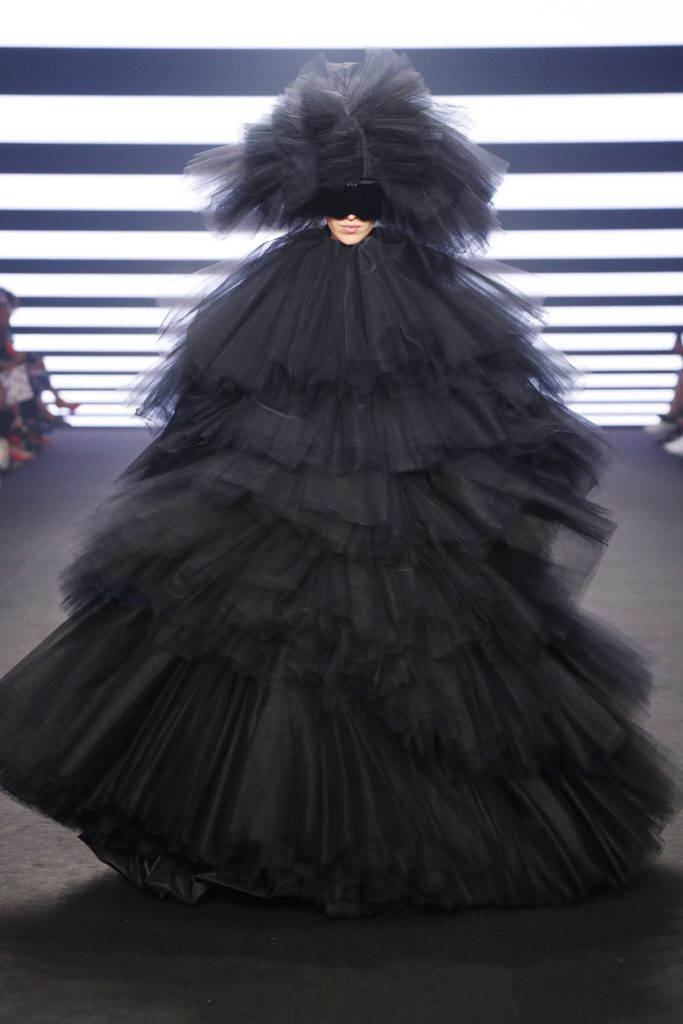
Mariette Hoitink: “There are so many, because backstage at Lichting is a pressure cooker of emotion, genius, and pure adrenaline. But one specific memory from the jury rooms always cracks me up and shows how unpredictable raw talent can be. One year, the international jury was feeling completely exhausted and explicitly said to us, ‘If we see another depressive, all-black collection, we are packing our bags and going home.’ Right on cue, Ferry Schiffelers walked into the room with a collection that was entirely black, accompanied by a deeply emotional, personal story. You could feel the collective gasp in the room. But the work was so incredibly beautiful, and his narrative was so pure, that the jury broke down in tears and ultimately announced him as the undisputed winner.
The public sees the flawless spectacle on the Amsterdam Fashion Week runway, but behind the scenes, it’s those moments of unfiltered emotion and absolute conviction that define the magic of Lichting.”
As a Lichting veteran, what is your favourite part of working with graduates during the Lichting trajectory?
Mariette Hoitink: ”Without a doubt, it’s witnessing the moment when they realise their own voice on a professional scale. When the graduates first enter the Lichting trajectory, they are still inside their own academic bubble. They look at their work through an internal lens. They also meet their fellow graduates from all the other academies for the first time, which brings a lot of shared energy and perspective to the experience.
My favourite part is guiding them, together with Rubia and Liv, through the shift from being a student who made a collection, to becoming a creative who has their own vision. During the trajectory, we help them to articulate why their work matters to the broader industry and how to present it to an international jury and network. Being part of that pivotal psychological and professional change is incredibly rewarding; it keeps me energised every single year.”
Both having a grasp on the fashion industry as a whole, what challenges are today’s graduates facing that previous generations didn’t have to contend with?
Danie Bles: “Graduating today is both more exciting and more challenging than ever before. Previous generations entered a largely analogue world. Today’s graduates are building careers in an entirely digital landscape. That creates incredible opportunities. You can reach a global audience instantly, present your work through film, performance or digital platforms, and no longer have to rely solely on the traditional runway format. At the same time, that digital world brings constant distraction and fierce competition. We’re exposed to so much content that everything risks starting to look the same. That’s why I believe now it’s more important for young designers to look beyond their screens. Visit museums, immerse yourself in culture, study history and seek inspiration from real life. Those original sources are what make your work unique. Technology, including AI, can be an incredibly powerful tool, but it shouldn’t replace creativity or personal vision. Consumers have shorter attention spans as well, so graduates not only have to create exceptional work, they also have to find ways to capture and hold people’s attention. There are undoubtedly more opportunities than there were twenty years ago, but standing out has become much harder. That’s why I believe focus is more important than ever. Know what you stand for, develop your own specialism, and make sure your story is authentic from beginning to end. That’s ultimately what people remember.”
Mariette Hoitink: “The landscape today is so much more complex than it was when we started. Previous generations certainly faced intense competition, but today’s graduates are navigating entirely different, systemic pressures. Today’s talent operates under a microscope. While social media offers unprecedented global reach, it also creates an overwhelming amount of noise. Graduates have to work twice as hard to be truly original. Plus, it seems like everyone is expected to be successful in a single day. On top of that, they have to deal with a global fashion industry that often feels like a broken system. It leaves very little room for quiet, unfiltered experimentation.
I agree with Danie that, on the other hand, this digital era gives them immense, immediate power. Because of social media, these graduates are being directly approached by celebrities, stylists and fashion lovers who want to wear and showcase their collections. This is exactly why the Lichting trajectory is more vital than ever. We offer graduates a safe environment and the strategic tools to manage this instant attention.”
What gives you hope when you look at the next generation of Dutch fashion talent?
Mariette Hoitink: “What gives me an immense amount of hope is their radical integrity and their refusal to play by outdated rules. Despite all the pressures we just discussed, this next generation is incredibly brave and doesn’t wait for permission from the old fashion establishment to change things. When I look at our recent cohorts and winners, three specific things fill me with optimism: previous generations were taught that fashion is competition. This next generation completely rejects that. They are building collectives, sharing resources, and lifting each other up. They understand that to survive and shake up the industry, they need to do it together. They are also redefining consumerism and identity and refuse to fit into the classic commercial moulds. Whether it’s 2022 contestant Denzel Veerkamp dismantling cultural narratives or our 2023 winner Yousra Razine Mahrah, blending heritage with striking contemporary design, they hold up a mirror to society with total confidence. Lastly, for this generation, sustainability isn’t a marketing buzzword or a separate ‘capsule collection’—it’s their starting point. It’s completely woven into their DNA. They look at deadstock, upcycling, and biotech not as limitations, but as the ultimate playground for creativity. In conclusion, they are fearless, they are highly collaborative, and they possess a profound sense of purpose.”

Where would you both like to see Lichting in another twenty years?
Mariette Hoitink: “In another twenty years, I hope Lichting is recognised globally as the blueprint for how the fashion industry nurtures and supports emerging talent. My dream is for the Lichting journey to extend far beyond the runway. I’d love to see it grow into a permanent incubator that provides long-term mentorship, business guidance and production support, giving young designers the tools to build sustainable careers without compromising their creative vision. I also hope Lichting continues to break down the traditional, rigid boundaries of what ‘fashion’ means. Whether someone graduates from a traditional academy or follows a self-taught path, I want it to remain the most open and inclusive platform for visionary designers. And of course, I want to celebrate 20 years with our biggest show yet, inviting back every single former participant, followed by the ultimate afterparty curated by Joost van Bellen. We will launch an exhibition celebrating two decades of talent and in the coming year we want to launch a photo book featuring the iconic imagery of our show photographer from day one Peter Stigter, and the stories from behind the scenes. Ultimately, my dream is to bring our entire community together under one roof to honour twenty years of creativity and the family that built it.”
Danie Bles: “I hope Lichting continues to exist for many years to come and remains a platform that champions originality, vision, individuality and creativity. Looking ahead, I’d love to see Lichting become even more visible. This year, for the first time, we’re presenting an exhibition during Amsterdam Fashion Week, which feels like an exciting step forward. I also hope we can continue following the designers beyond the competition itself and create more opportunities for them to develop their careers. It would be amazing if we could organise more best of showcases, giving alumni another platform to present their work and gain greater visibility. I’d also love to see more collaboration with Belgium. Why aren’t we working more closely with Antwerp and Brussels? We’re two small countries with an incredibly strong fashion heritage. Rather than operating separately, I think there’s a real opportunity to join forces and strengthen our position internationally.”
Lichting is een collaborative concept van AFW & HTNK supported by Meester Koetsier foundation.