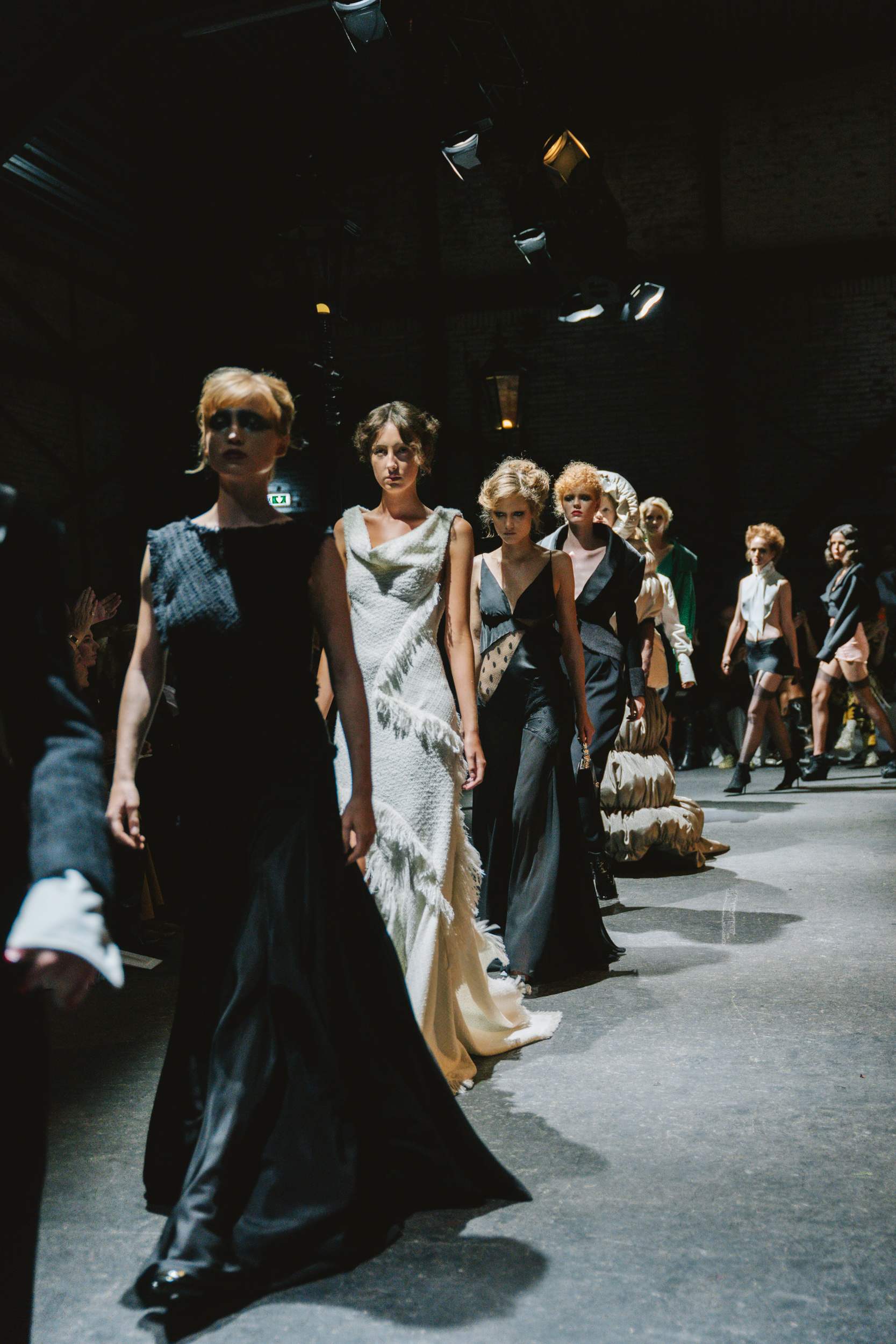
For their Amsterdam Fashion Week debut, Amsterdam-based couture label DEFIJTER&VANBRUGGEN presented De Belofte van Buiten, a collection inspired by the flâneur and flâneuse and the changing role of physical presence in an increasingly digital world. Looking towards the middle and late nineteenth century, Rossell de Fijter and Daan van Bruggen imagined the city as a place for wandering, observation and encounter. Here, clothing became a means of performing identity — and of rediscovering it through being present in the world.
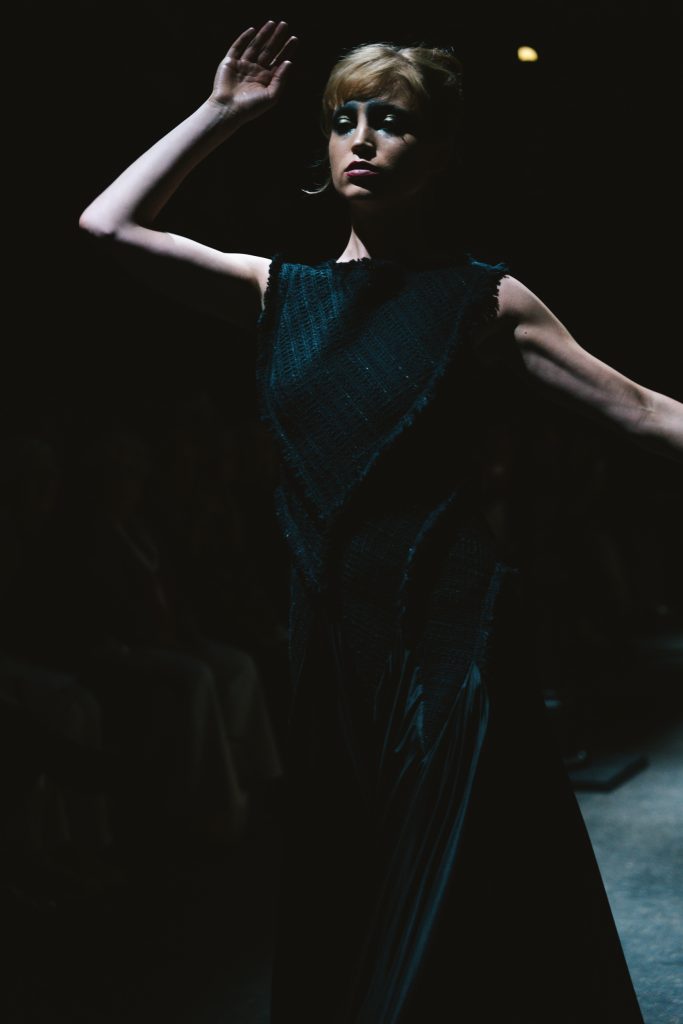
There was something strangely familiar about the women of DEFIJTER&VANBRUGGEN. Veiled, framed by dramatic, almost tragic expressions and dressed in silhouettes that seemed to have arrived from another century, they stood watching. Not posing, exactly, but staring directly into the room. Their eyes followed the audience, meeting every gasp and movement with a piercing stare.
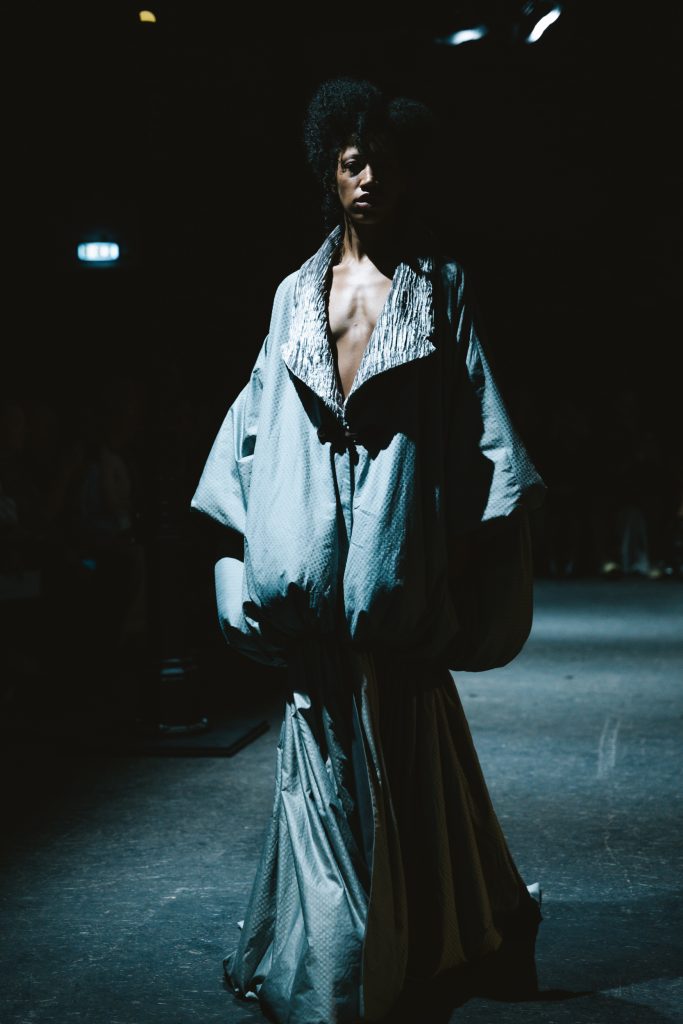
Traditional menswear tailoring was pushed into exaggerated proportions, with rounded shoulder pads, dramatically cut collars and deep silhouettes that felt lifted from a time long before our own. A beige puckered skirt was gathered at the ankles, flaring out slightly as tulle peeked from beneath the hem. Another look paired a sharp, baby-pink structured jacket with exaggerated hips and a high collar with an embroidered bias-cut skirt.
The collection found its femme fatale in a light grey wool dress, which followed the body before revealing an unexpectedly deep back, its daring cut somehow retaining an air of restraint. Elsewhere, the bias cut became more sculptural. One striking silhouette formed a massive, rounded top, its bubble hem opening into a train just below the knees. The gathered volume bounced with every step, finished with a low neckline edged in velvet and secured with a mandarin closure.
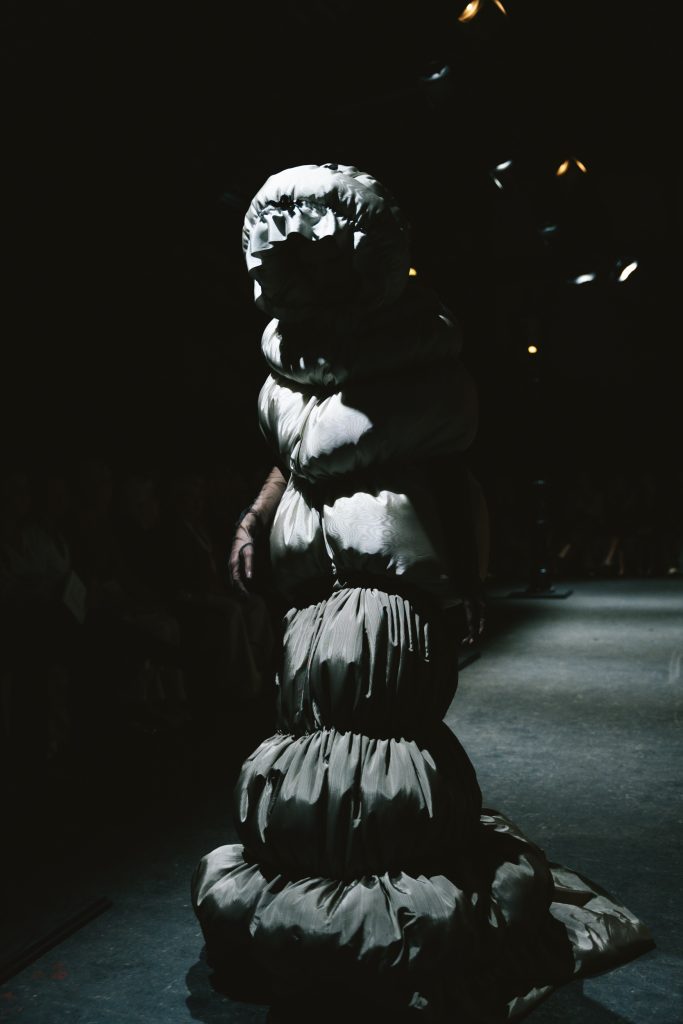
As more characters entered the room, the silhouettes grew progressively more exaggerated. One model appeared almost entirely absorbed into a cocoon of puffed fabric, each ring tightened with black bows. Around her face, the layers gathered into a massive hood, the rounded volumes almost swallowing her head as they closed in around it.
Around them, the room had become part fashion show, part old Parisian apartment. Street lanterns, furniture, old perfume bottles and heavy glassware helped transport the audience elsewhere. The models, meanwhile, slowly became part of the furniture themselves. One by one, they took their seats in the middle of the room: one smoking, another reading a book, others simply sitting still and watching.
Time seemed to stretch as the women sat beautifully and silently, their stillness becoming as important as the clothes. With their presence drawing the audience’s attention towards the middle of the space, a model suddenly smashed a glass.
The room jolted back into motion. Everyone stood and began to walk out, leaving the carefully constructed world behind almost as abruptly as they had entered it.
Images by Olivia Witmond