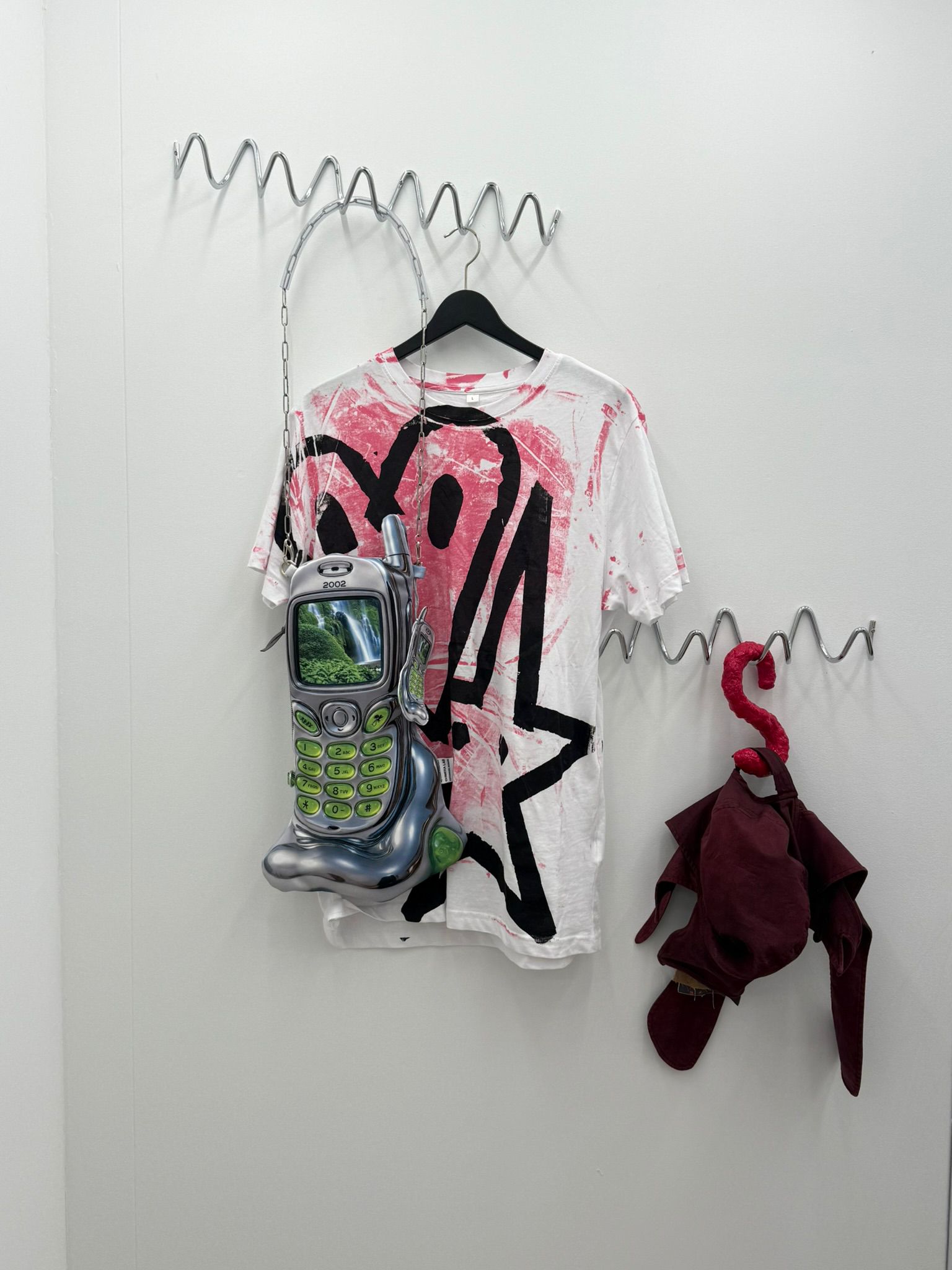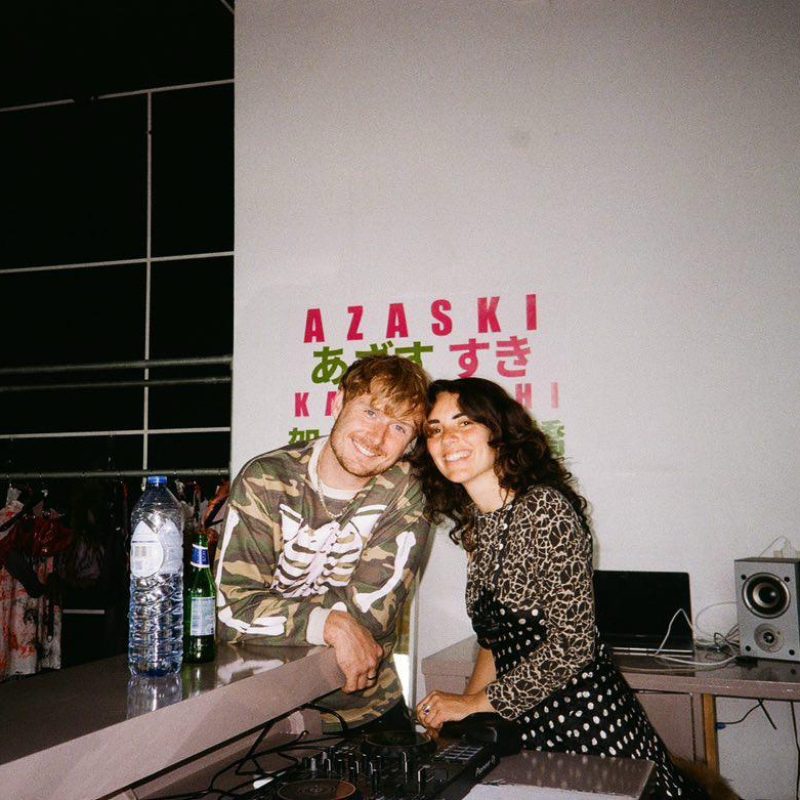
Two years ago, in the first week Dream Unit quietly unlocked its doors, I walked into a space that seemed almost too put-together for something everyone claimed to have “just heard about yesterday.” Back then, Teun and Evy were just beginning their first venture as shop owners, fuelled by instinct, ambition, and the kind of scrappy confidence that only comes right before your first real tax bill. I interviewed them in that very first chapter, when Dream Unit was still an emerging whisper in Amsterdam’s creative underground.
Now, almost exactly two years later, we meet again. This time not to decode their concept, but to look back at everything that came after: the challenges of running a physical space in a shifting city, the realities of entrepreneurship in the Dutch fashion landscape, the unexpected detours, the loyal community they built, and the dream that somehow stayed intact through it all. What follows is a candid, slightly mischievous conversation about resilience, reinvention, and what it really means to build something of your own in Amsterdam today.
You founded Dream Unit in 2023. What was the dream back then, and how has it evolved since?
Teun:
The dream back then was to open a shop and have fun with it. It honestly hasn’t always been fun and games, but what’s still amazing is that we’ve managed to keep a physical space where people can actually come in. I think our view on Dream Unit has become more realistic. You learn what’s actually possible and when to kill your darlings. For me now, the dream is to turn Dream Unit into something almost mythical, a name everyone knows. We’ve been fighting for that for two years and are not planning to give up easily.
Evy:
I was literally thinking about this yesterday. About the first draft of what Dream Unit was, because that really was its purest form. Back then we didn’t know the rules, we just went for it, and it’s that blissful naivety that pushes forward truly unique concepts. I want to keep finding ways to return to that state of not knowing what you’re doing, because that’s when you keep inventing new things. Collaborating with other people really helps with that. Sometimes someone pitches an idea that makes you think, wow, I never looked at it that way before. It’s refreshing, it keeps things interesting, and it stops us from getting stuck.
Teun:
Funny you say that, because that’s actually the opposite of what I just said. You lean towards the unrealistic and I lean towards the realistic.
Evy:
Haha, true. But I think that’s exactly why we balance each other out so well. I feel a strong need to focus on innovation, and you keep me grounded along the way.
What gap did you see in Amsterdam’s fashion landscape that you wanted to fill? Do you think you’ve succeeded in doing so?
Evy:
From the very beginning I felt that vintage stores had stopped moving with the times, and people were craving something new. It just made sense to me that more shops like Dream Unit should exist: places that showcase new brands and designers, or sell pieces made by friends and friends of friends. In many other countries you already see that happening, and I think it would be great if more stores like Dream Unit popped up in Amsterdam too. We’ve already heard rumours that people have been inspired by us and want to start something similar in their own way, maybe a calmer version or a punk version, or just in a different niche. We also often hear from people who are genuinely happy that we started this, because it’s something they were really missing, both as makers and as consumers.
Teun:
It might sound arrogant to say we’ve filled that gap, but we definitely brought something new to Amsterdam.
Evy:
What do you think, Loïs?
Loïs (AFW):
When I first walked into Dream Unit, I was genuinely excited by your concept and the selection of designers you carry. I’m always searching for new designers and brands for my work, but I rarely see them represented in the streets of Amsterdam. Having a space that makes young designers visible and accessible feels so refreshing. For anyone outside the fashion industry who’s simply curious, it’s also the perfect way to discover new names. In that sense, I think you really were pioneers. There have always been concept stores, sure, but not a fixed place where emerging talent hangs between the racks. Visiting your store, whether I buy something or not, always feels like a creative experience in itself.
Teun:
Yes, our audience is basically people who think what we sell is really cool but can’t afford it.
That brings me to my next question: running a store that champions emerging design talent isn’t exactly an easy business model. What drives you to keep doing it?
Teun:
There have been plenty of moments when we wanted to quit, but we’ve always made sure we weren’t stuck in something we couldn’t get out of. Our first location had a monthly lease, so when sales weren’t great, we decided to take a short break from running a shop. Then we found a new space in the Nine Streets, where we started doing week-long pop-ups to see if that worked better. One week turned into a month, then three months. We lived from one month to the next, but we loved it. Looking further ahead, we knew something had to change to make the business sustainable, but I really believe that in the creative industry, the ones who last the longest eventually come out on top. That flexibility we’ve built into everything we do has kept us going. It’s the key to staying passionate without feeling trapped.
Evy:
And it brings much more than just the shop itself. Having a physical space opens so many other doors. That’s why I’m in LA right now doing styling work, and Teun has been doing more production. But what still really keeps us going are the people who tell us how grateful they are for what we do. That never gets old. Having a space in Amsterdam feels like such a huge blessing. Take GATTO for example. They started out as two separate designers, launched their first collection with a party at Dream Unit, and now their pieces are being worn by major artists. They’re still thankful that we believed in them. Seeing people grow like that is incredible.
After the pandemic, I think we all needed a third space, somewhere to connect outside of home and work. Everyone who’s now part of our close circle, we met through the shop. Places like Dream Unit can genuinely change your life by helping you find your people. It sounds a bit cringey, but it’s true. You can have that kind of connection online on blogs or Reddit, but it just hits differently in real life.
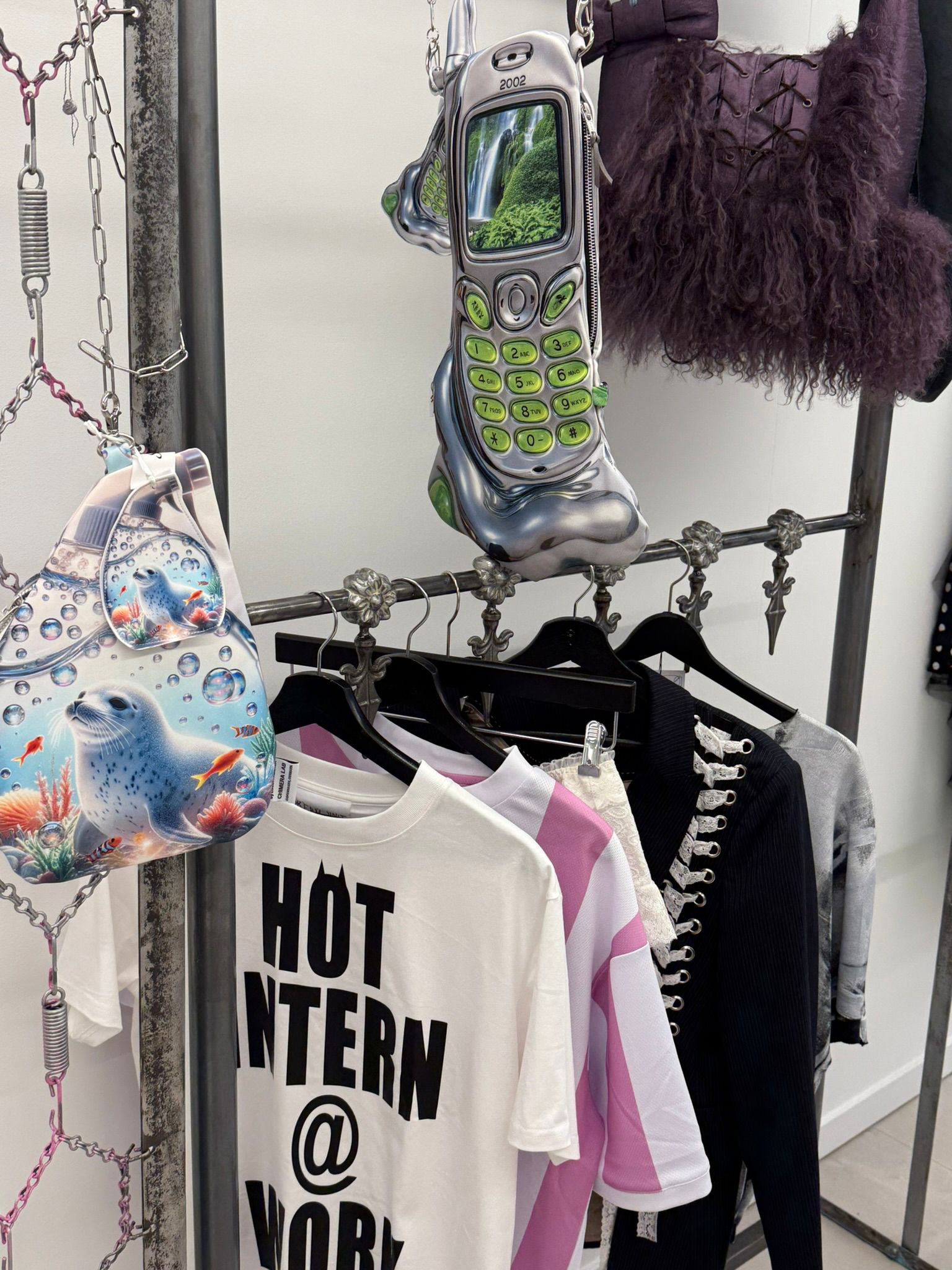
How do you balance commercial realities with your creative vision?
Teun:
Running the shop over the past two years has meant making some more commercial choices. The website is a good example. Most people do it the other way around, but we were in a position to receive a subsidy, so we decided to build something that could provide a more stable income for the future. Originally, we only wanted a physical space and no social media, but that turned out to be a naïve take on our dream. The website is really a way to sustain it. In a shop, you can only show so many products, but a website reaches the whole world and allows for a much larger selection. That’s something we’ve learned along the way.
If you could give one piece of advice to someone starting a creative business in Amsterdam today, what would it be?
Evy:
Just start and don’t overthink it. Things will come naturally. Find your own way of doing things instead of copying others. You’ll always get unsolicited advice, and we often thought, “That’s fine, but we’ll do it our way.” Many people don’t take the leap because they fear making mistakes. Don’t romanticise it too much, be realistic, but just start.
Teun:
Keep going, say yes whenever you can, and collaborate with others. Keep your risks low and always have a way out. Take risks in the least risky way possible. Being an entrepreneur isn’t about taking risks, it’s about managing them. Amid all the chaos, you need to keep your risks under control.
Evy:
Collaboration is essential. People genuinely want to help if you ask. And don’t write emails using ChatGPT! I find that so impersonal.
Do you get a lot of emails written by ChatGPT then?
Evy:
So many.
Teun:
I understand why it’s convenient. We get a lot of requests to sell at our shop, and when it’s clear ChatGPT wrote it, it doesn’t show that someone put effort into their application. In other situations, it can be efficient, but when we receive applications, we want to see who you are and why you want to work with us. We don’t want a cookie-cutter text with no personality.
What do you hope Dream Unit contributes to the next generation of designers?
Evy:
Confidence in their talent and their making. The opportunity to earn from their creations. We also function as a platform. We give a lot of business advice and enjoy helping the brands and designers we work with. That’s something you don’t really learn at AMFI or other creative schools, so we’re happy to provide that support.
Teun:
We offer a sort of business crash course to those we sell on. The most important thing is getting your brand out there, and that’s what we help with. I genuinely enjoy giving advice, and I’m now also working as a business adviser for certain brands. I earned that trust by giving advice right from the start when they walked into our shop.
Evy:
They teach us a lot, and we teach them a lot. That exchange is really rewarding.
How do you see the store, or the idea of Dream Unit, evolving over the next few years?
Evy:
I honestly don’t think I dare to dream much bigger than what we have now. It would however be amazing to have a Dream Unit festival or a Dream Unit restaurant or café. To expand the idea of what Dream Unit can be and create more physical Dream Unit spaces. I just want people to keep meeting each other. Bringing everyone together is what I enjoy the most, and as long as we can keep doing that, I’m happy.
Teun:
Wasn’t there even a relationship that came out of one of our events?
Evy:
Yes! Exactly. Maybe that’s what’s still missing, a Dream Unit baby. People who met at Dream Unit and then have a child. That would be so fun!
Teun:
All jokes aside, I just want Dream Unit to continue to be a springboard, both for us and for the people around us. The bigger the platform grows, the bigger the opportunities become, and that would be fantastic.