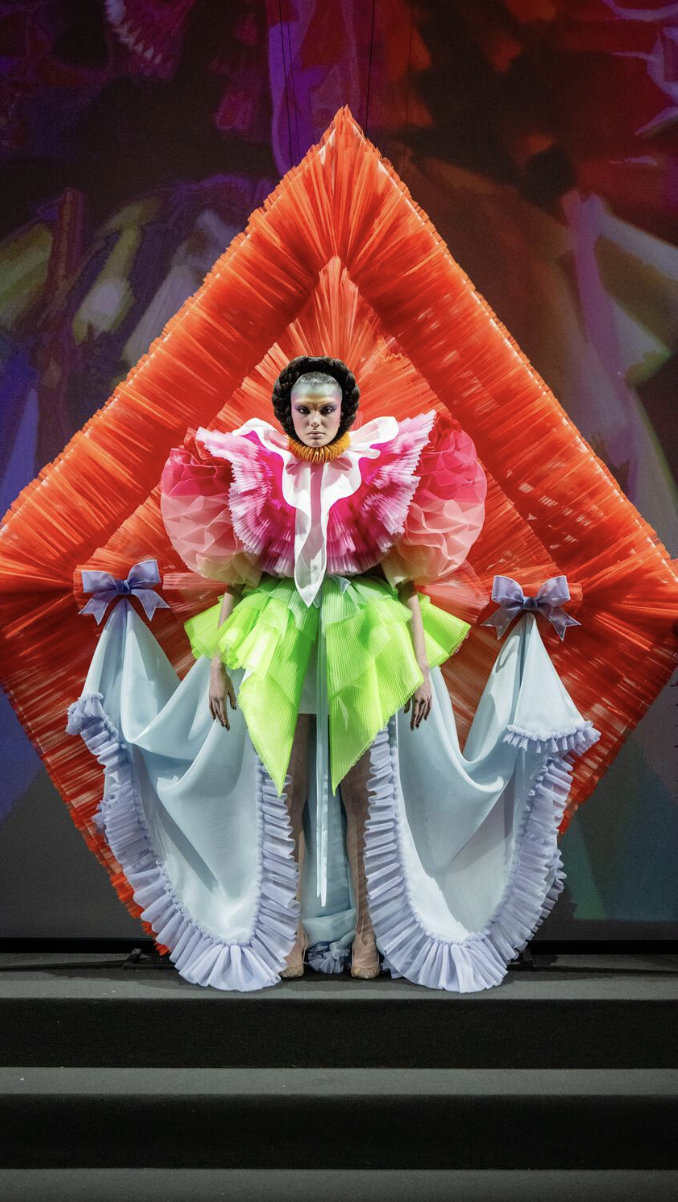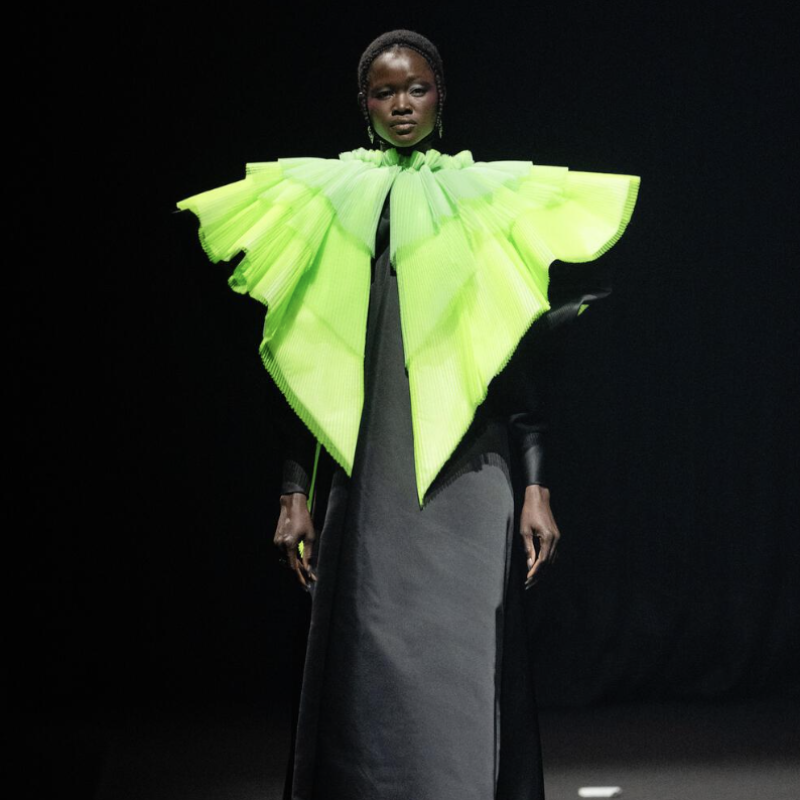
tch talent held its own at Paris Haute Couture Week 2026. Peet Dullaert, Ronald van der Kemp and Viktor & Rolf each presented shows with a distinct voice: Dullaert with sculptural, body-conscious tailoring, van der Kemp with camp, sustainable spectacle, and Viktor & Rolf with live performance and transformative hope. Iris van Herpen was absent from the calendar this season, putting the spotlight firmly on the remaining trio to showcase the range of Dutch couture, from precise craftsmanship to theatrical storytelling.
Peet Dullaert – Spring 2026 Couture
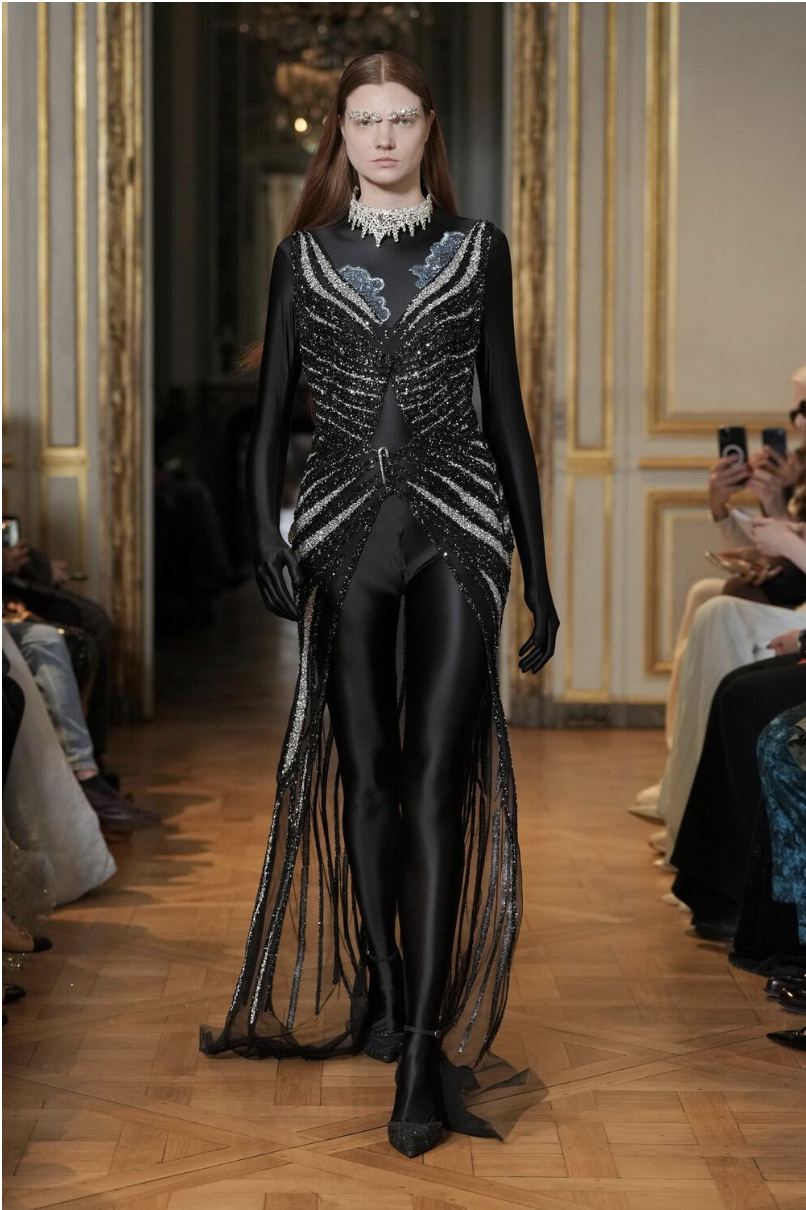
At Paris Haute Couture Week, Peet Dullaert’s Spring‑Summer 2026 offering felt like a continuation and a deepening of a couture voice devoted to human movement and architectural precision. The Dutch designer, long prized for tailoring that seems to breathe with the body, approached this collection as a study in paradox: innerwear made outward, structure that feels fluid, a play of surface and structure.
Linings were used with such precision that they became exterior accents without ever feeling literal or “inside‑out,” and fabric folded and draped with an ease that seemed to dissolve the boundary between support and adornment. Ballet‑pink corsets peeked out from beneath beaded jackets, while meticulously crystal‑bedecked sheath gowns — a signature from his past couture outings — reappeared floating above Lycra bodysuits, the embellishments seeming to fuse with the wearer’s anatomy rather than merely drape across it. Long tuxedo coats trailed silk flares reminiscent of tailplanes in flight. Folded waistlines and playful textile puffs breathed lightness into sharp lines. Visible tailoring details and unfinished hems, a deliberate choice, gave the garments a lived‑in poetry that contrasted with their couture descent.
By the finale, the collection felt like a choreography of fabric and light, a quietly dramatic vision that left the audience with the sense that Dullaert’s couture exists not just to adorn, but to inhabit, transform, and linger in memory.
RVDK – We Are the World
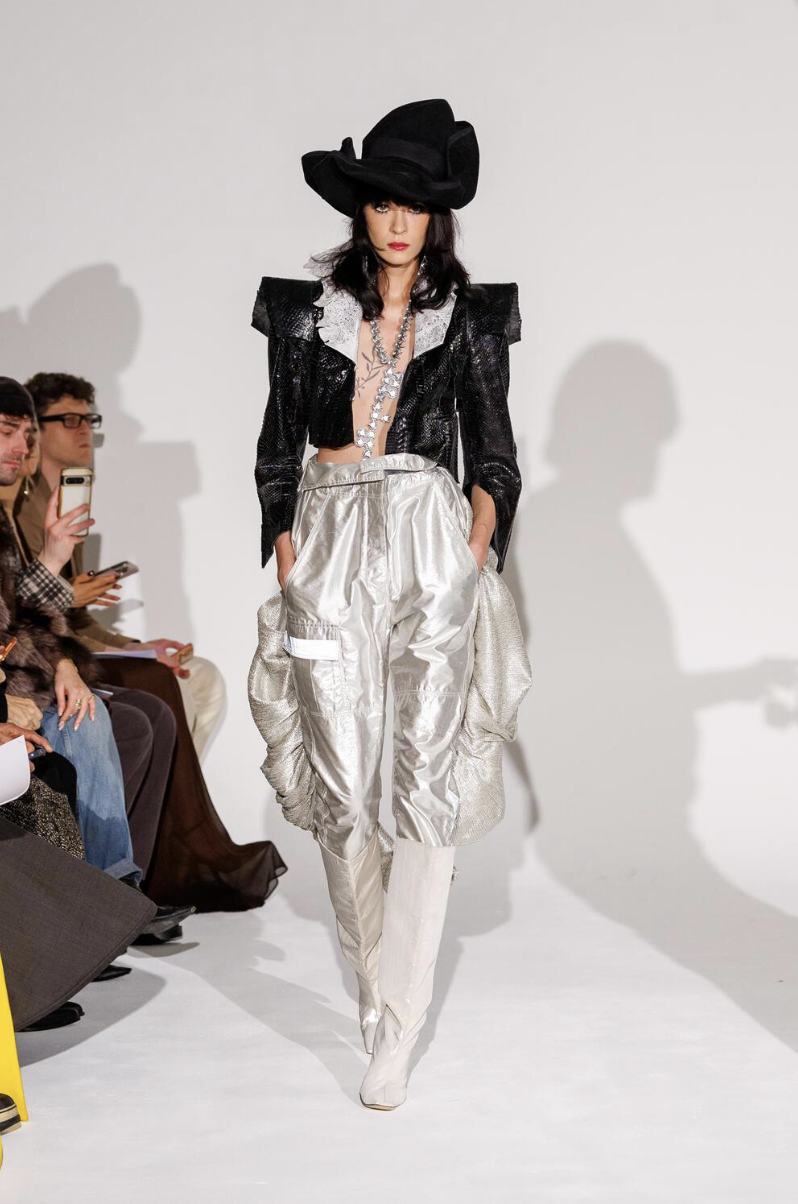
If there’s one constant in Ronald van der Kemp’s couture universe, beyond the unabashed camp and a love for 80s glamour dialled up to excess, it is his uncompromising commitment to sustainability. RVDK designs for birds of paradise, operating on a frequency entirely his own. On the Paris Haute Couture Week schedule, Van der Kemp plays a different game altogether, deliberately sidestepping the market logic that governs many of his peers.
For Couture Spring 2026, titled We Are the World, sustainability was not an afterthought but the collection’s foundation. Ninety-eight per cent of the looks were crafted from upcycled materials. Surplus couture fabrics, shearling remnants and discarded alligator skins sourced from a mega-luxury handbag house were transformed into sharply structured skirts, jackets, minidresses and corseted gowns. Ballooning silhouettes and pointed shoulder pads set the tone, while Van der Kemp also debuted his first foray into costume jewellery. Earrings and accessories were created from 3D-printed recycled plastics, hand-painted, lacquered and embellished with overstock beads and crystals.
True to form, the show unfolded as a performance. Van der Kemp himself joined the stage, assuming the role of photographer, capturing each model as they moved through the space one by one. Between snapshots, he paused to converse, gesture and draw attention to specific details, blurring the line between presentation, process and personal narrative.
Viktor & Rolf – Diamond Kite
Blurring the boundary between front and backstage has long been part of Viktor & Rolf’s couture language, as has placing the designers themselves at the centre of the performance. Live crafting on the runway is not new territory for the duo. What felt unprecedented this season was the emotional impact of it.
With Diamond Kite, the designer duo quite literally constructed their final look in front of the audience. A sequence of all-black ensembles entered the stage. Each carried a single burst of colour, whether a collar, a bow or a rod. As the models moved through the space, Viktor Horsting and Rolf Snoeren stepped in, removing these vivid elements one by one and passing them forward. At the centre stood a model in a high-collared, belted white minidress. With each intervention, her look evolved. Colour accumulated, volume expanded, and the dress slowly took on a new shape. By the final moment, the once-minimal silhouette had transformed into a luminous, sculptural kite, hovering between fantasy and flight.
Whereas V&R usually leans towards satire and absurdity to deliver sharp and effective commentary on the zeitgeist and the state of our current society, this time they chose a childlike sense of pure hope and gentle transformation. Less snarky and tongue-in-cheek than their usual work, but no less impressive or spectacular, the final image felt dreamlike and unforgettable, a moment destined to remain etched in collective memory.