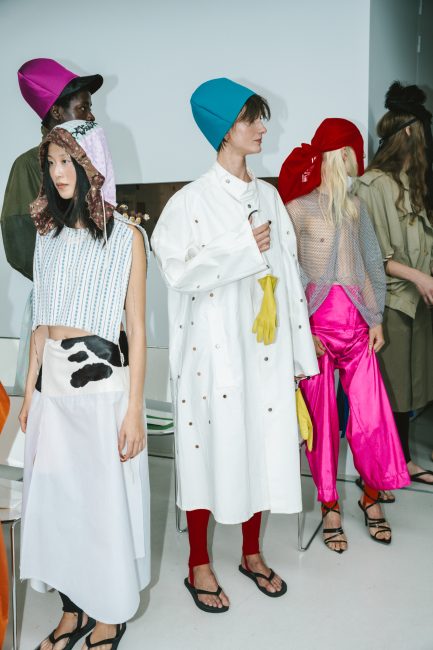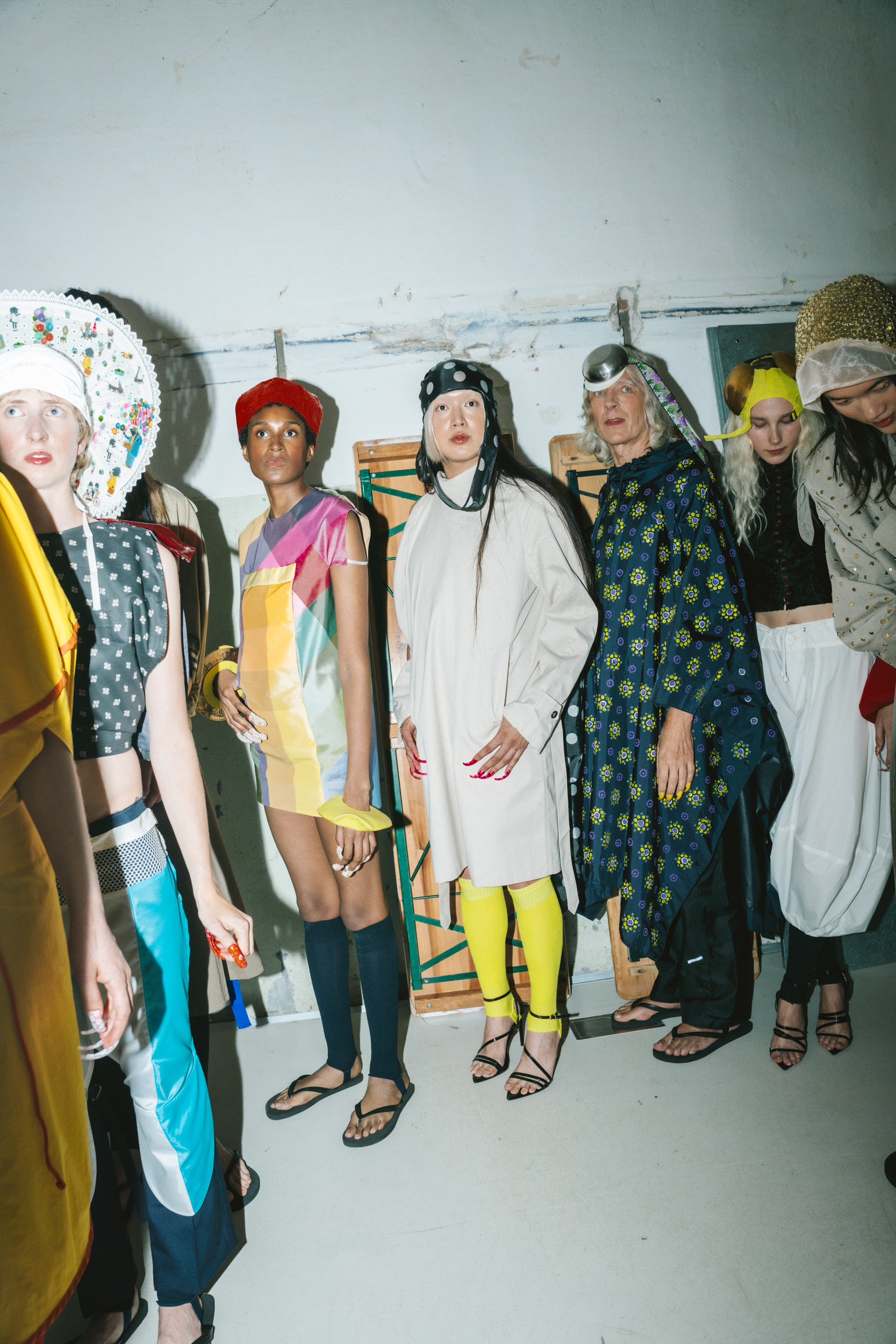
Raincoats, kraplaps, HEMA bags and bicycle parts collide in Pablo Salvador Willemars’ Nat bij regen, a colourful celebration of Dutch heritage, craft and queer identity.
There are few things more universally Dutch than rain. It is a constant presence, an inconvenience we have learned to dress around, cycle through and complain about with remarkable consistency. For Nat bij regen (“Wet in the rain”), Pablo Salvador Willemars takes this very ordinary part of Dutch life and looks at it through the lens of heritage, memory, craft and queer identity.
The title comes from a street sign Willemars spotted online, reading “Nat bij regen”. Whether the sign was real or photoshopped was almost beside the point. Its strange flatness, the fact that someone had gone to the trouble of informing people that rain makes things wet, was enough to inspire a collection about our relationship with rain, from the practical to the magical, the historical to the childish.
Willemars works exclusively with existing materials, turning discarded objects and familiar Dutch references into sculptural garments and headpieces. Traditional dress from places like Staphorst and Zeeland provides much of the vocabulary, but nothing is left quite where it was found.
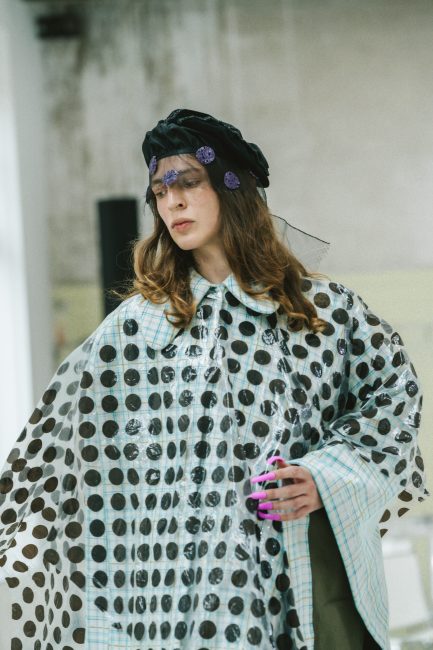
A traditional kraplap gets a rain hood stitched straight into its seams, while Dutch oorijzers escape their usual hiding place and land on a neon-yellow cap with the top chopped off. The result is less historical costume, more high-fashion rain gear having a minor identity crisis. Craft gets similarly gloriously out of hand. Willemars takes a traditional Dutch printing technique, using a humble cork block studded with nails, and stamps it all over raincoats and hats, turning what might once have been a quiet embellishment into a full-blown dotted kakofonie.
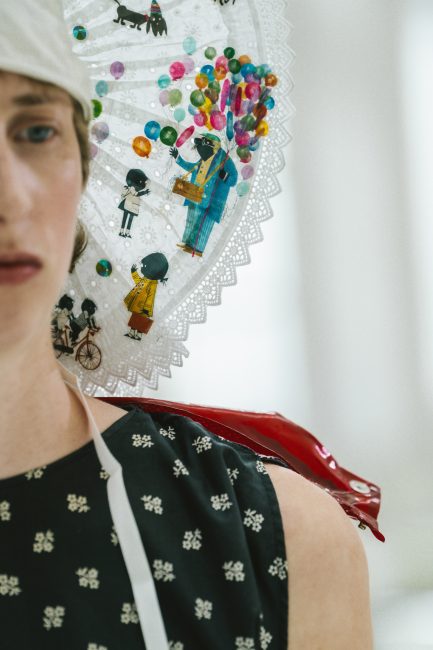
The colour palette borrows from Fiep Westendorp’s Jip & Janneke, but apparently decides that black and white are far too restrained. Blue, yellow, pink, green and just about everything in between turn the familiar characters into a rainbow-coloured parade. A cropped blue-and-yellow raincoat looks pulled straight from a particularly fashionable childhood memory, while a white halo bonnet keeps its Jip & Janneke print tucked inside: a secret lining of nostalgia.
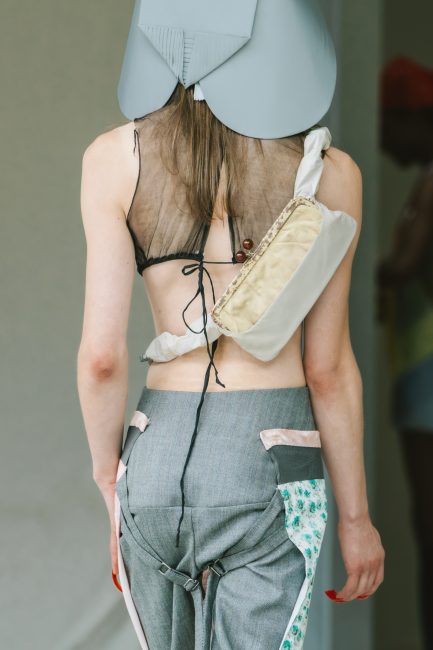
Even the most recognisable rainwear silhouettes are treated with suspicion. A classic trench coat is worn backwards, its sleeves opened up, while its pockets are repurposed as armholes, forcing the hands into an awkward new position. A polka-dot raincoat is wrapped and twisted into a headscarf, leaving a long dotted train down the back. A yellow raincoat balloons into a voluminous skirt, while a bicycle chain is promoted to bag strap. HEMA tea towels become arm cuffs, its iconic shopping bags find a second career framing the jaw and fastening into the hair as rainproof headpieces.
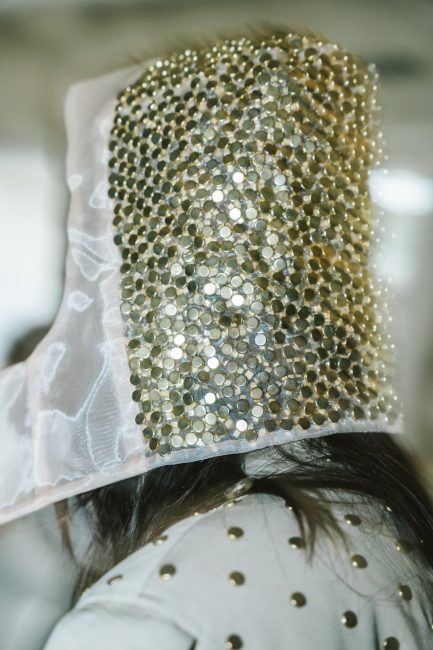
The hats are particularly important. For Willemars, millinery is not a finishing touch but often the beginning of the design process. In Nat bij regen, they become personal shelters, sculptural objects and elaborate forms of self-expression, combining traditional Dutch headwear with rainproof materials, found objects, and a healthy disregard for where one thing is supposedly meant to end and another begin.
Willemars’ collection presents Dutch heritage at its best, not as something fixed or nationalistic, but as something that can be questioned, reclaimed and made personal. Traditional objects become raw materials; childhood references become adult garments; functional objects become sculptural ones. Heritage is not preserved here so much as put to work.
After all, if you are going to get wet anyway, you might as well make it fashion.
Images by Olivia Witmond