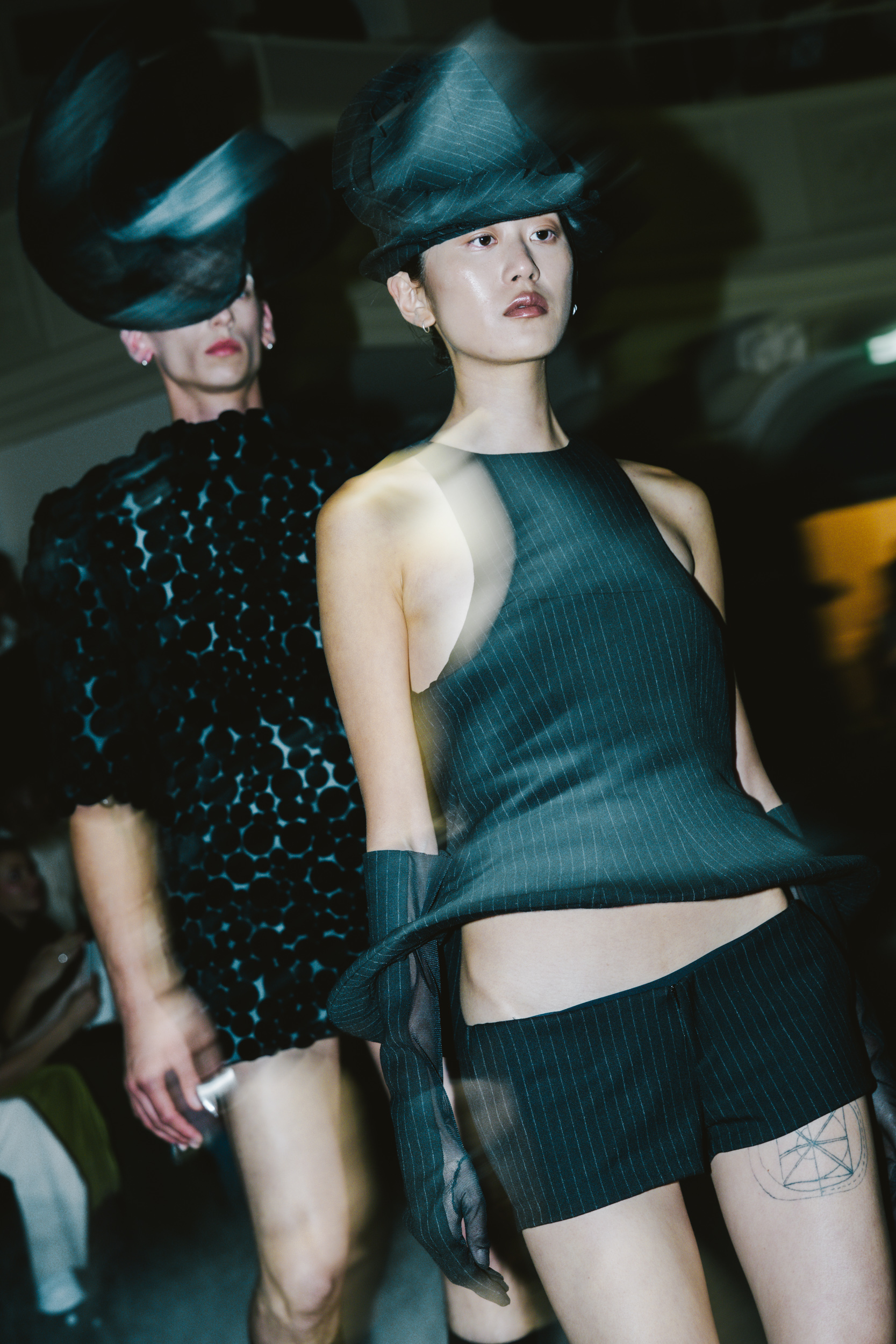
Few things are more frustrating than a game that insists it is fair. For Mens erger je niet, ULKUHANBATUHAN turns the iconic Dutch board game into a social allegory, exploring the systems that decide who moves forward, who gets stuck and who gets knocked back to the beginning. This time, the board happens to be a runway.
Presented by designers Ülkühan Akgül and Batuhan Demir, alongside Executive Producer Kaan Hicyilmaz, Mens erger je niet examines the politics of patience through a series of looks navigating presence, displacement and conformity. The designers use fashion to explore the invisible structures that determine who gets ahead, who has to wait and who is expected to simply play along.
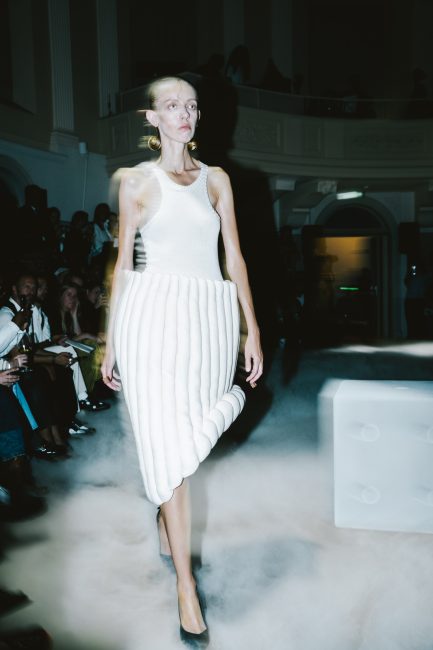
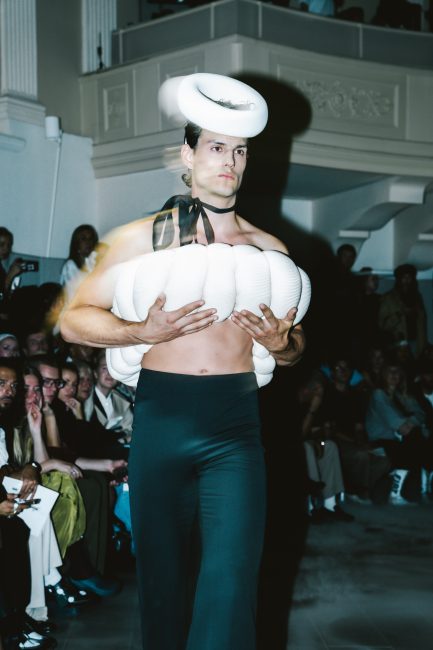
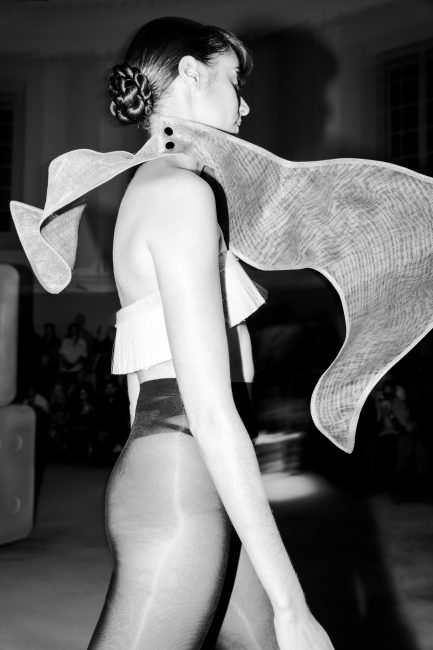
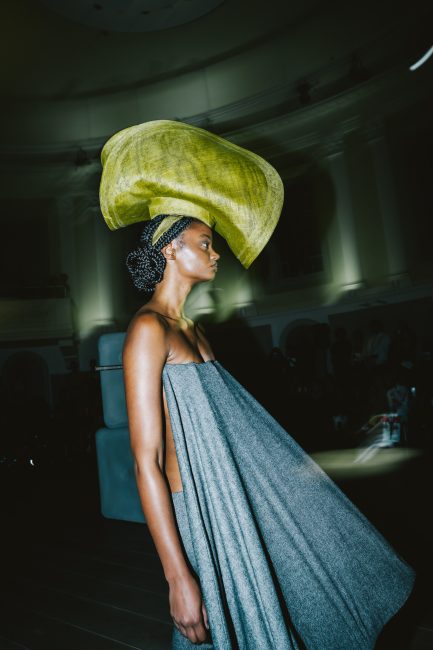
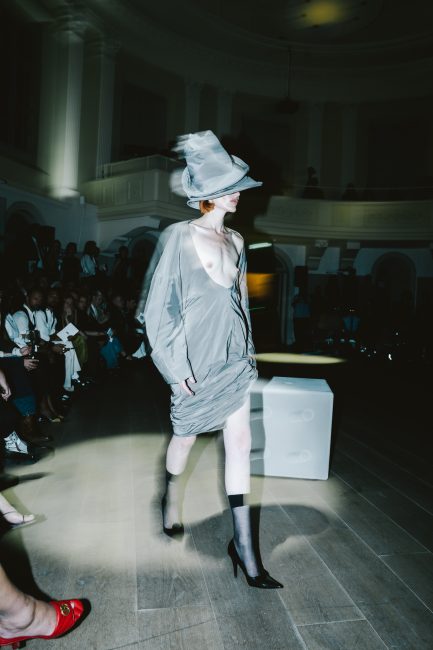
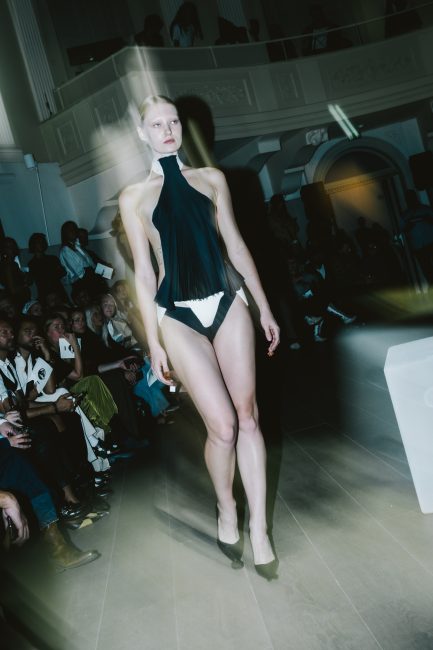
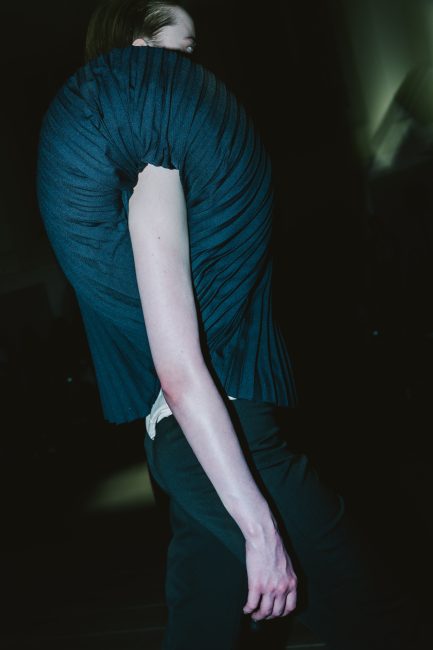
The show began with The Starting Line: a black-and-white A-line dress in a tartan print, complete with a lampshade-like structure beneath the skirt and an extraordinary donut-shaped hat. From there, the silhouettes became increasingly surreal. Hats appeared as if they had been struck by a storm and then frozen in place. A padded skirt curled irregularly upwards. Sheer fabrics collided with velvet polka dots, while oversized forms and sculptural headwear repeatedly distorted the proportions of the body.
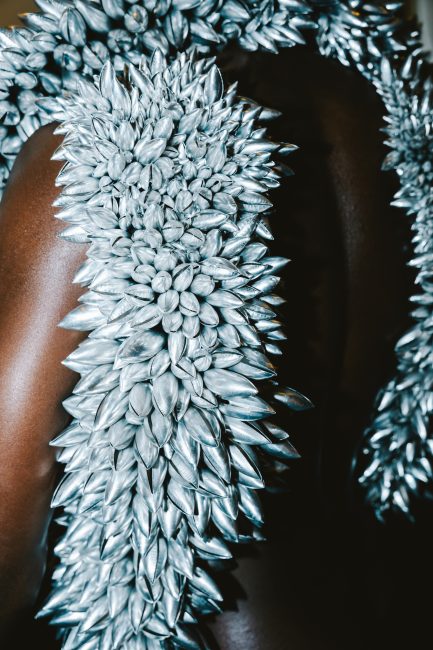
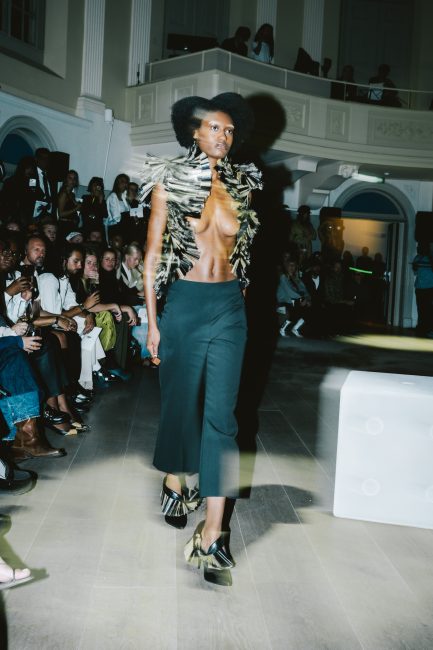
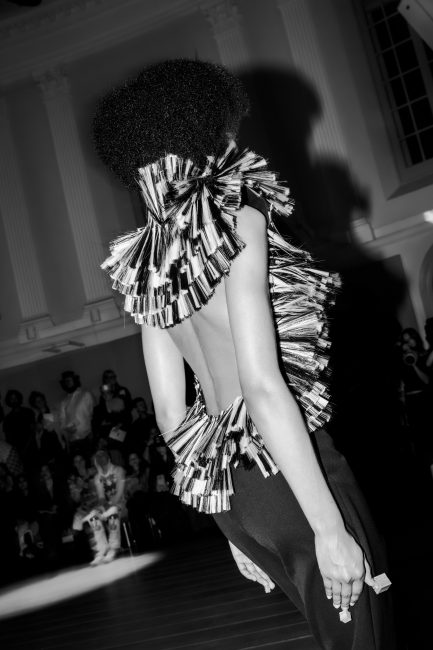
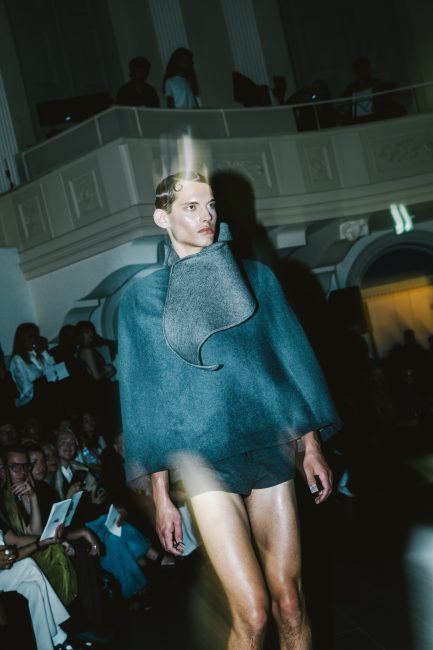
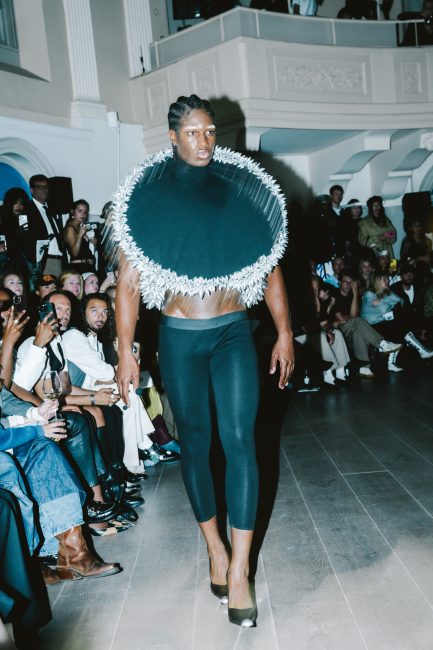
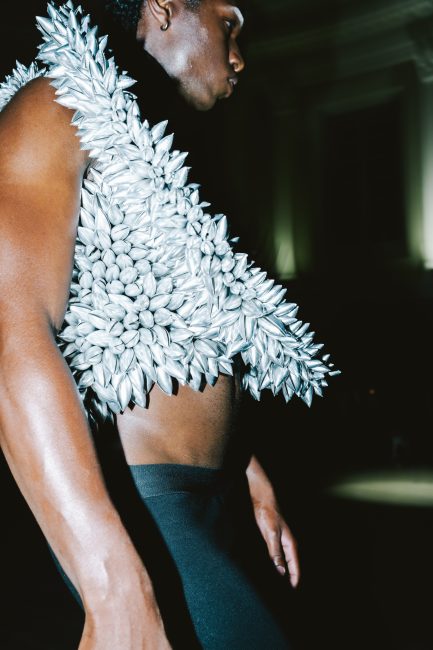
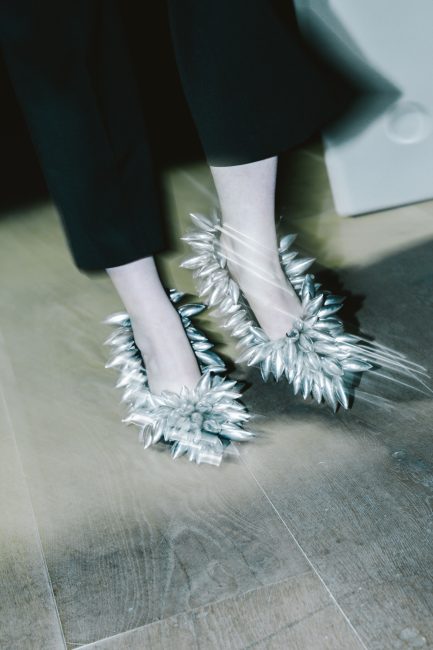
Much of the collection’s visual language came from an extensive process of textile manipulation and collaboration. The Distraction featured upcycled escalator brushes forming a top and piercing outwards, creating one of the show’s most striking silhouettes. A circular top covered in bells made from upcycled buttons became The Detour, turning every step into a noisy reminder that not every path follows a straight line.
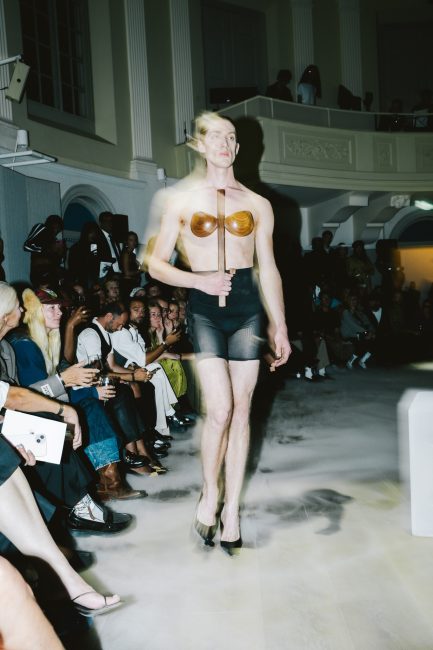
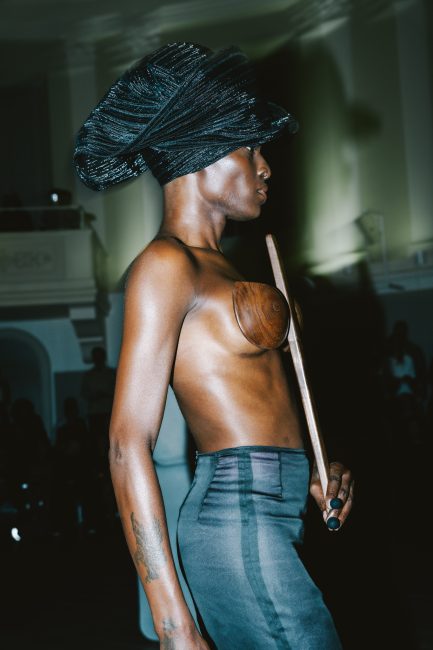
Elsewhere, wood took centre stage. One look featured wooden disks weighing down the arms, while a sculptural wooden breastplate, somewhere between a chest guard, a ladle and something distinctly more phallic, was held against the body. In The Unprotected Piece, sheer black shorts and velvet polka-dot padding accompanied the unusual wooden construction. As the rulebook accompanying the collection explains: “he looks equipped for the game but not shielded from it.”
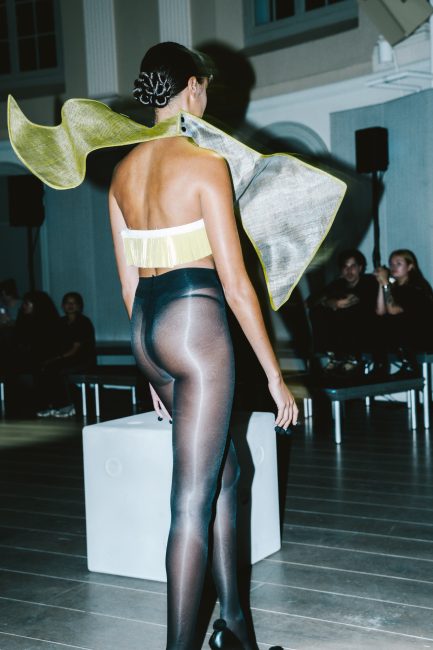
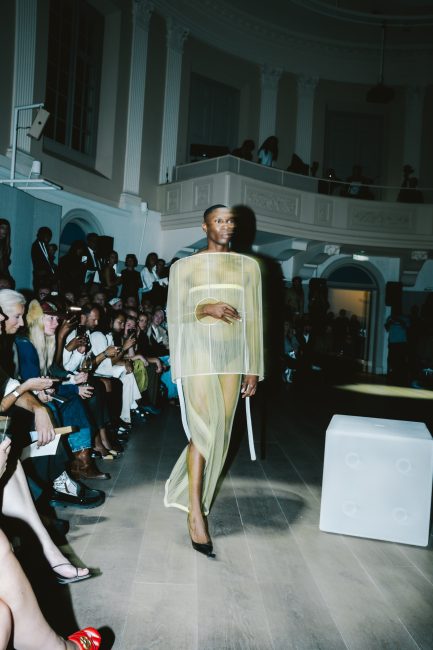
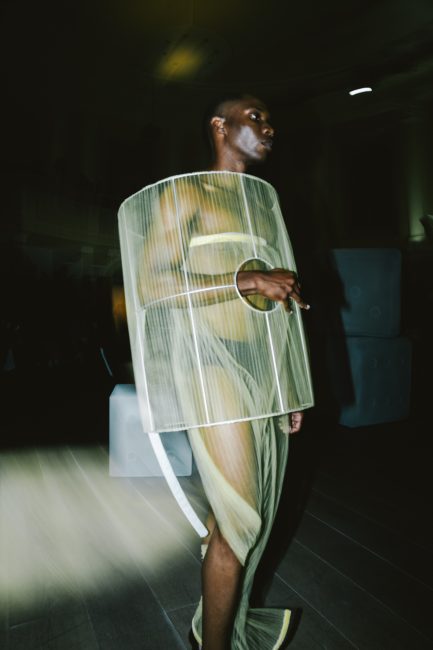
The game’s language continued through the names and stories attached to each look. The Golden Square wrapped the body in a pale yellow cage-like cylinder, suggesting the seductive disguise of luck: “eventually luck is repeated often enough that we begin calling it talent.”
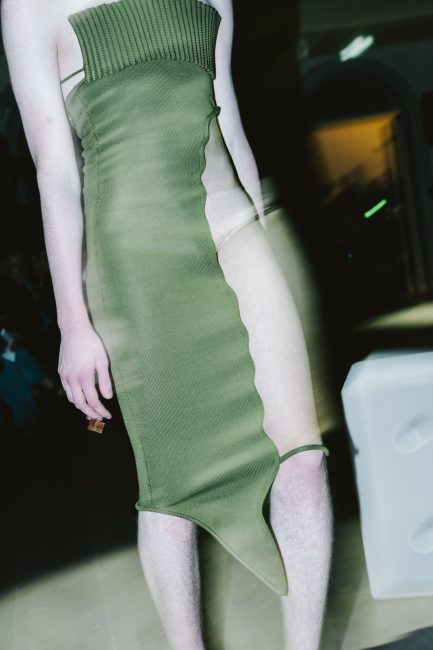
The collection also makes room for the detours. A green knitted tube dress, made from organic cotton yarn, was deliberately undone along one side, leaving half the body exposed. The look, named The Fast Track, sits in contrast to The Detour, where a skirt of bells challenges the idea that there is one correct route through the game. “We are taught to distrust detours,” the booklet explains, listing the gap in a résumé, a different education or a different language among the things that supposedly require explanation.
By the time the final looks appeared, the game pieces had become increasingly difficult to separate from the people playing them. A velvet polka-dot bubble dress with dramatically enlarged shoulders, made from deadstock Dries Van Noten fabric and topped with a sculptural hat, was The Winner. Its silhouette “twists, expands and accumulates until body, garment and game piece become impossible to separate.” Even reaching the finish line offers no neat conclusion. “She has reached the end,” the rulebook observes, “yet the image does not offer the clean resolution a winner is supposed to provide.”
And perhaps that is the point. Mens erger je niet presents a game in which everyone is supposedly free to move, while quietly acknowledging that not everyone starts from the same position. “You are free to move. No one mentions that some pieces begin closer to the finish, no one mentions who designed the board, no one remembers voting on the rules, still we play.”
The runway becomes the board. The models become the pieces. The audience becomes the spectators. And suddenly, the familiar frustrations of a childhood game begin to look a lot like the systems we navigate every day: structures whose rules are often accepted without questioning who created them, or who they benefit.
The show’s final page insists: “This is not a political statement.” But after watching ULKUHANBATUHAN turn bells into detours, brushes into protection and fashion into a board game, it is difficult not to see the politics hiding underneath the play.
Images by Olivia Witmond